Applied Vehicle Dynamics – Charlotte, NC, USA at UNCC

Early register discount until October 22th

Early Register

Professionals
Individual Price: US$ 2,345
Group of 3 or more: US$ 2,145/person

Students
Individual Price: US$ 695
Group of 3 or more: US$ 600/person

Regular Register

Professionals
Individual Price: US$ 2,745
Group of 3 or more: US$ 2,345/person

Students
Individual Price: US$ 825
Group of 3 or more: US$ 695/person

The Color Binder is included with professional registration!
S
tudents can add it for an additional $150.

Receive a 15% discount if you register for the Applied Vehicle Dynamics Seminar AND the Data Driven Engineering Seminar. You can request the 15 % discount when you register for the second seminar.

​To be eligible for the group registration price, your team/university must have at least 3 attendees. Please make sure that all members of your group inform the same university name during registration. If your group doesn't have 3 or more attendees, you will be required to pay the difference.

If you have any questions, send us an email at seminars@optimumg.com.

About the seminar

This seminar is one of the most intense experiences you’ll ever have in a classroom setting.

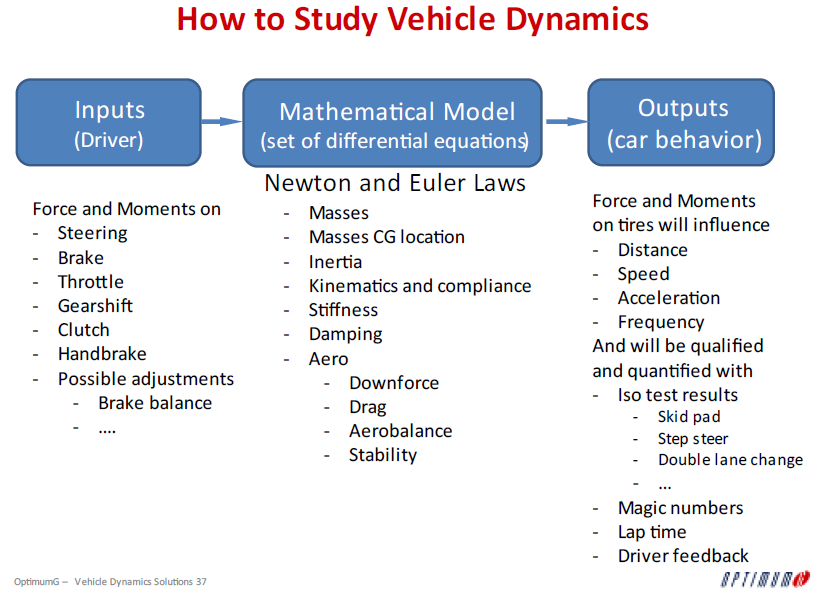
Past attendees tell us this seminar is one of the most intense experiences they’ve ever had in a classroom setting. It’s four days long, and pushes you to go beyond experience and intuition and makes you ask “why,” “how,” and “how much” certain factors affect vehicle performance.

You’ll interact with other attendees, watch live demonstrations, and ask questions to get feedback. By the end, you’ll have learned about every aspect of vehicle dynamics, plus data acquisition and analysis.

This seminar is internationally recognized as one of the best sources of knowledge in vehicle dynamics for engineers. You learn the skills and knowledge you’ll need to succeed in your projects. From designing a new car concept or exploiting an existing design, you’ll learn applied vehicle dynamics for car design, simulation, manufacturing, preparation, testing, and development.

Topics Covered:

  • Tires
  • Aerodynamics
  • Kinematics
  • Steady State and Transient Weight Transfer
  • Damping and Vibrations Theory
  • Car Design and Chassis Setup
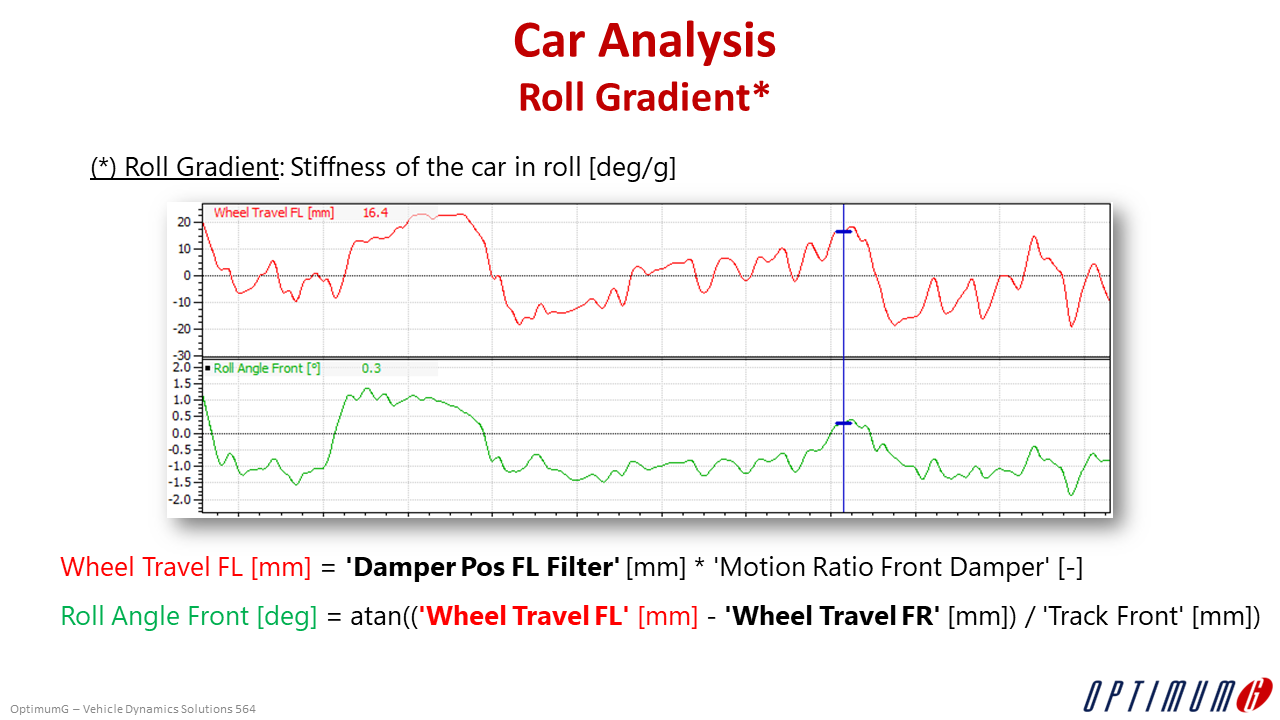
  • Vehicle and Driver Data Analysis
Seminar Content Overview

OptimumG Vehicle Dynamics Seminar Applied to Vehicle Concept, Simulation, Testing and Development

Seminar Objectives

It’s about connecting the dots. Through a vehicle dynamics course, applied to vehicle concept, design, simulation, testing, and development specifically tailored for automotive engineers, OptimumG can help participants come away with a better understanding and appreciation of how all parts of the vehicle must work in cohesion to have an outstanding result.
Previous seminar attendees have reported an increase in the quality of communication among the individual team members as well as new perspectives on already applied principles in vehicle design and development.
OptimumG offers a four-day program specifically focusing on race car design and development effects on car grip, balance, control, stability, and overall racetrack performance and consistency.
This four-day program is a blend of an academic course and a practical workshop inviting questions and answers as well as interactions between the participants.
It will be taught by OptimumG president Claude Rouelle who will bring his race car engineering expertise and practical on-track examples of simulation, data acquisition, and database management.

Company Background

A vehicle dynamic consulting firm, OptimumG helps clients enhance their understanding of vehicle concept, simulation, design, testing, development, and analysis of onboard acquired data from truck and off-road to race car vehicles through seminars, consulting, and software development.
OptimumG has over 280 years of combined automotive engineering experience ranging from commercial vehicles to high-performance and race cars.
Our engineers have provided in-house seminars, training programs, simulation products, and services for companies such as Dunlop, Michelin, Goodyear, Bridgestone-Firestone, Ferrari, Peugeot, Toyota, General Motors, Chrysler, ZF Sachs…just to name a few.
At OptimumG, we have the engineering expertise, knowledge, and perspectives to provide automotive engineers with the continuous performance their organization is striving to achieve.

Seminar Content

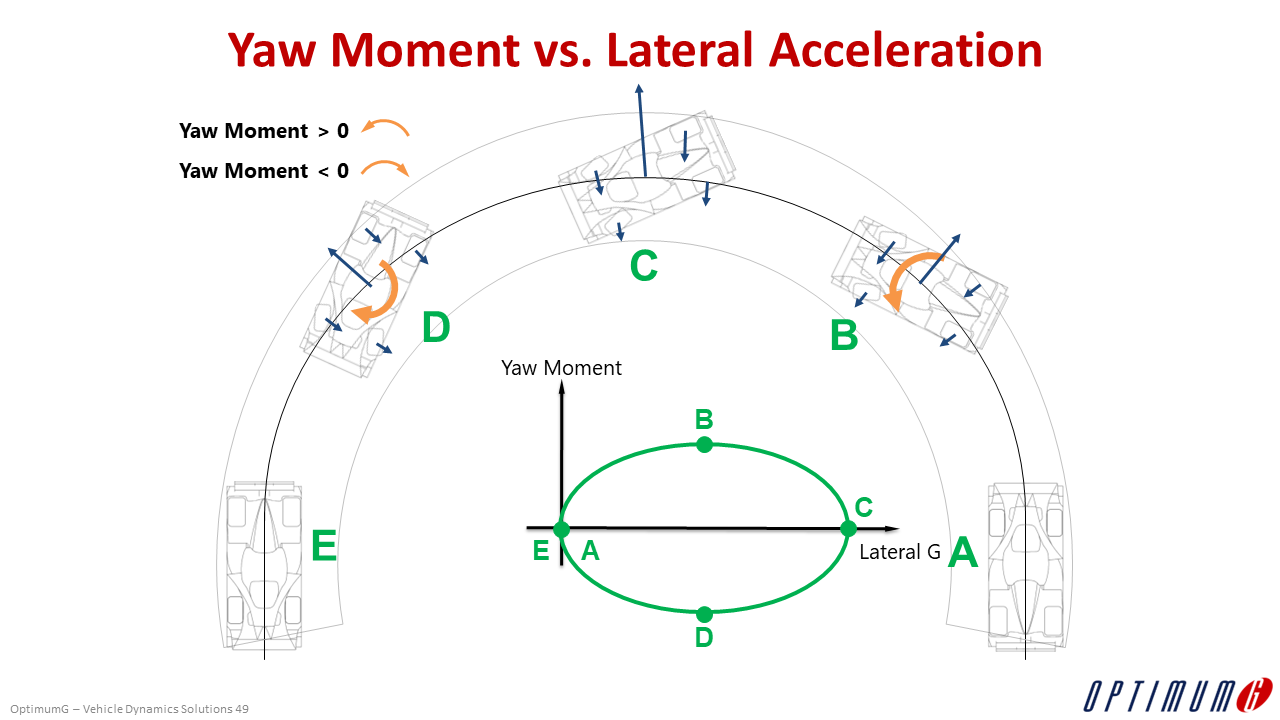
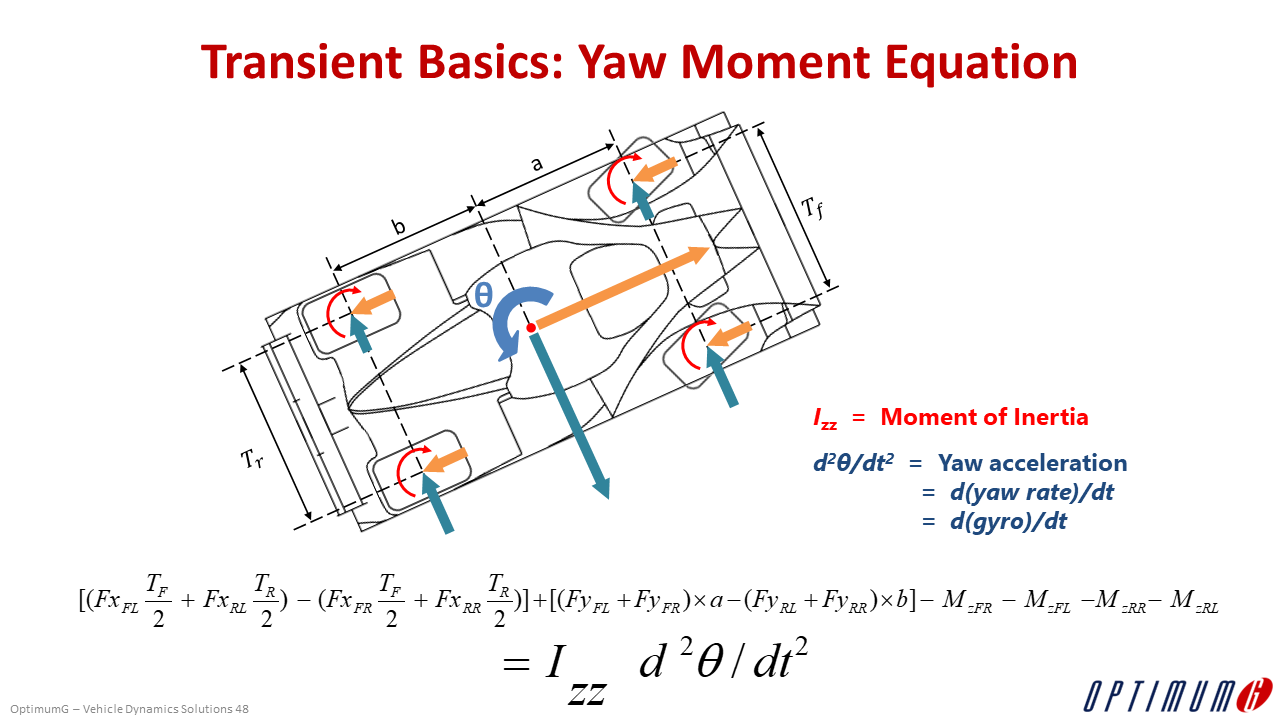
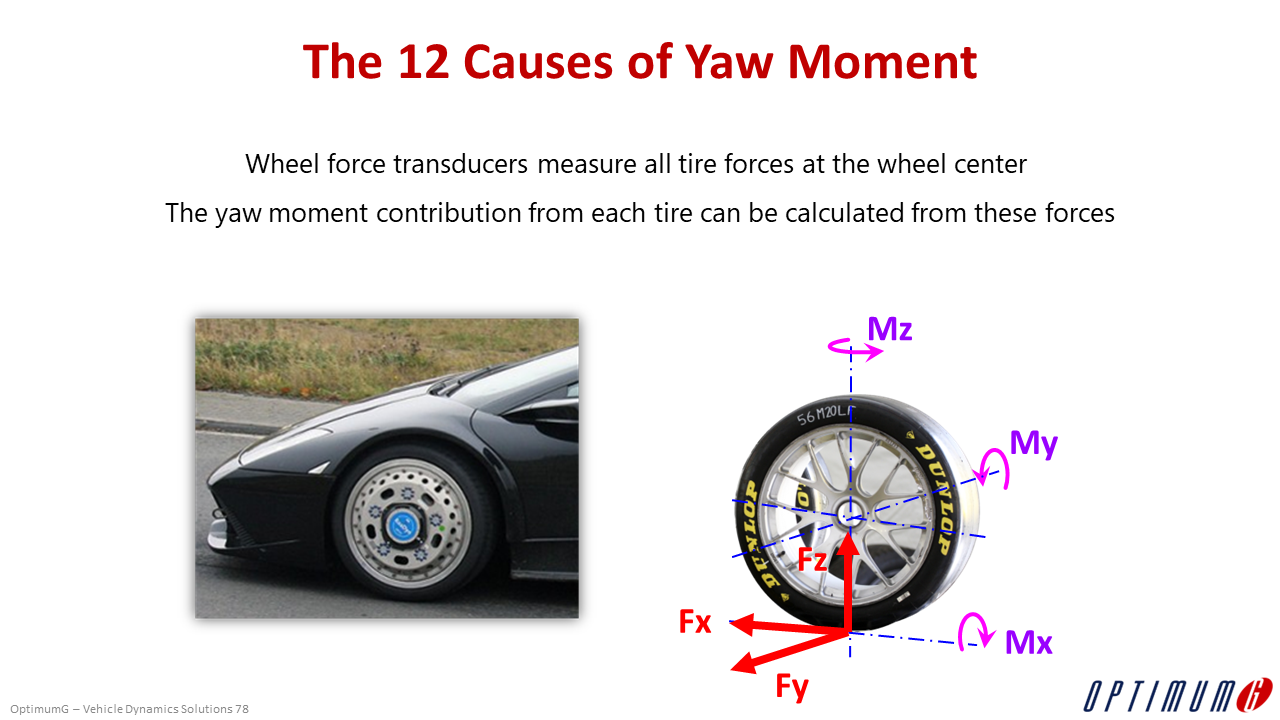
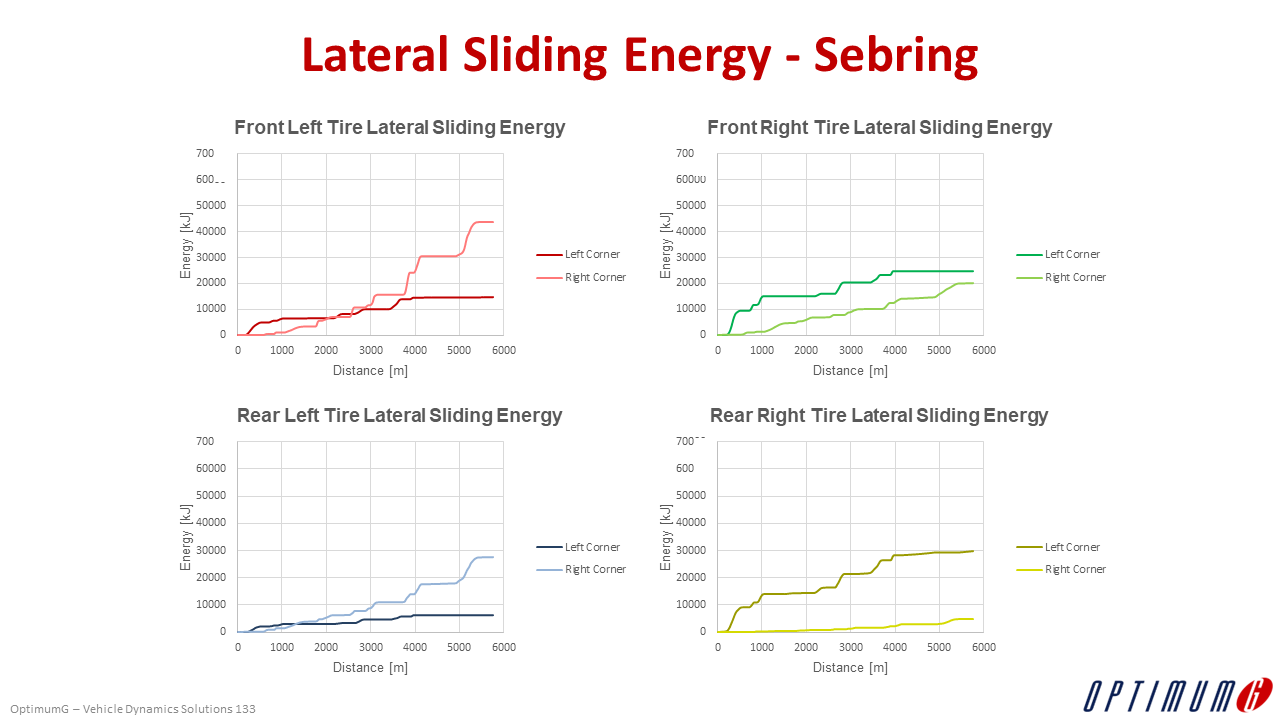
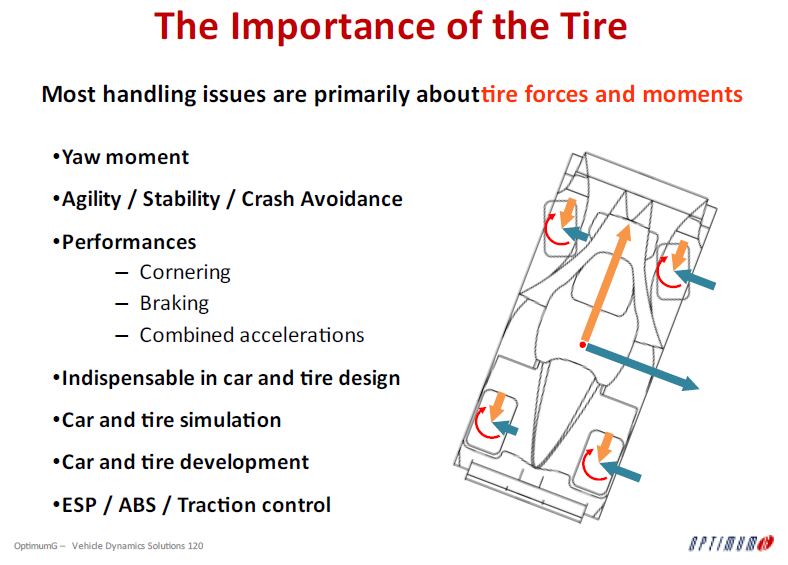
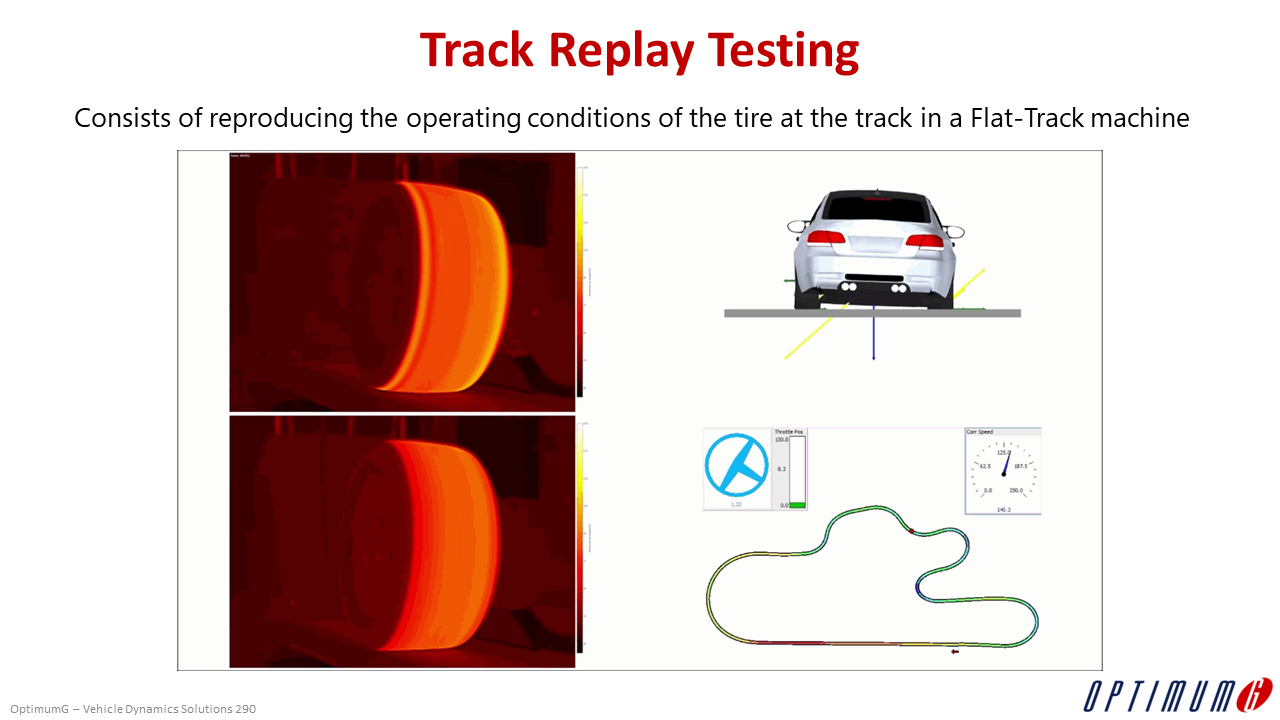
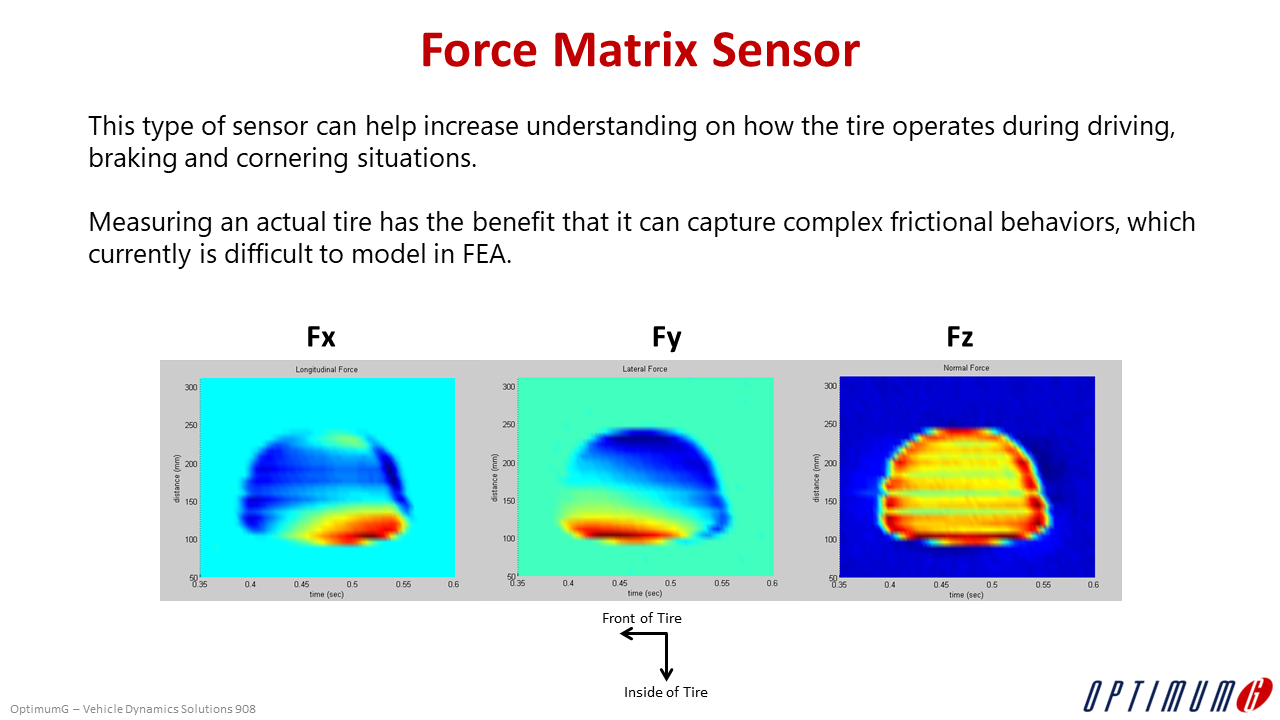
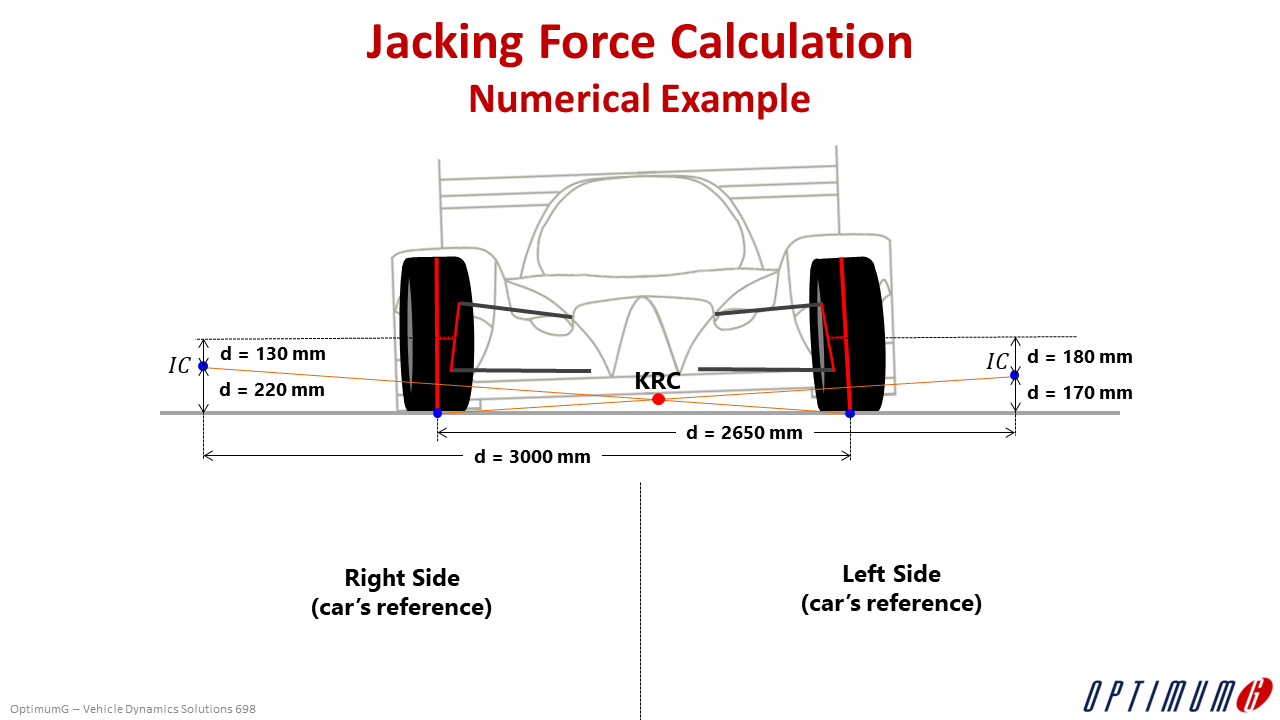
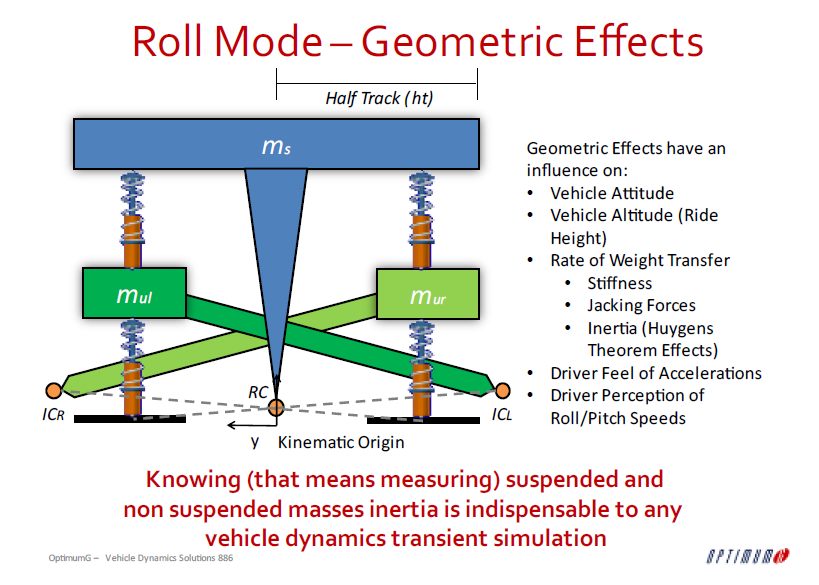
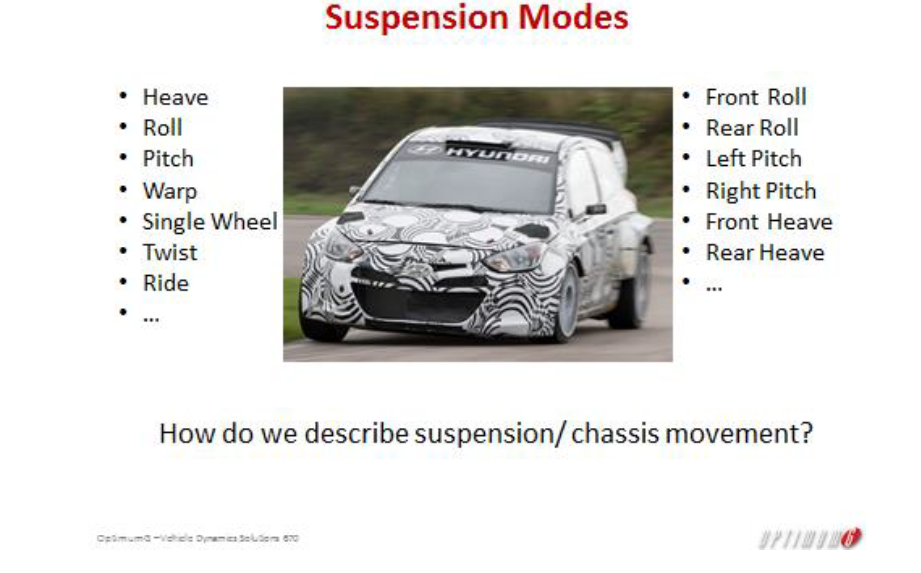
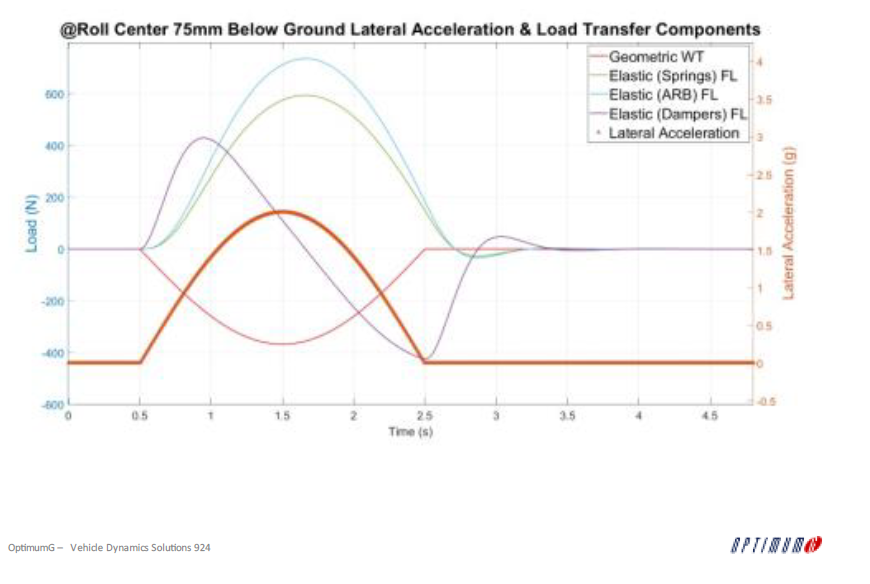
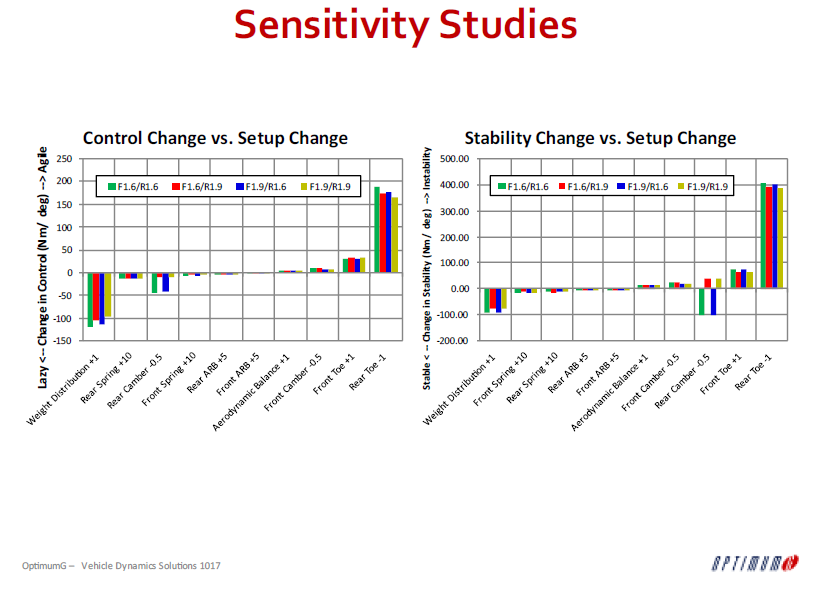
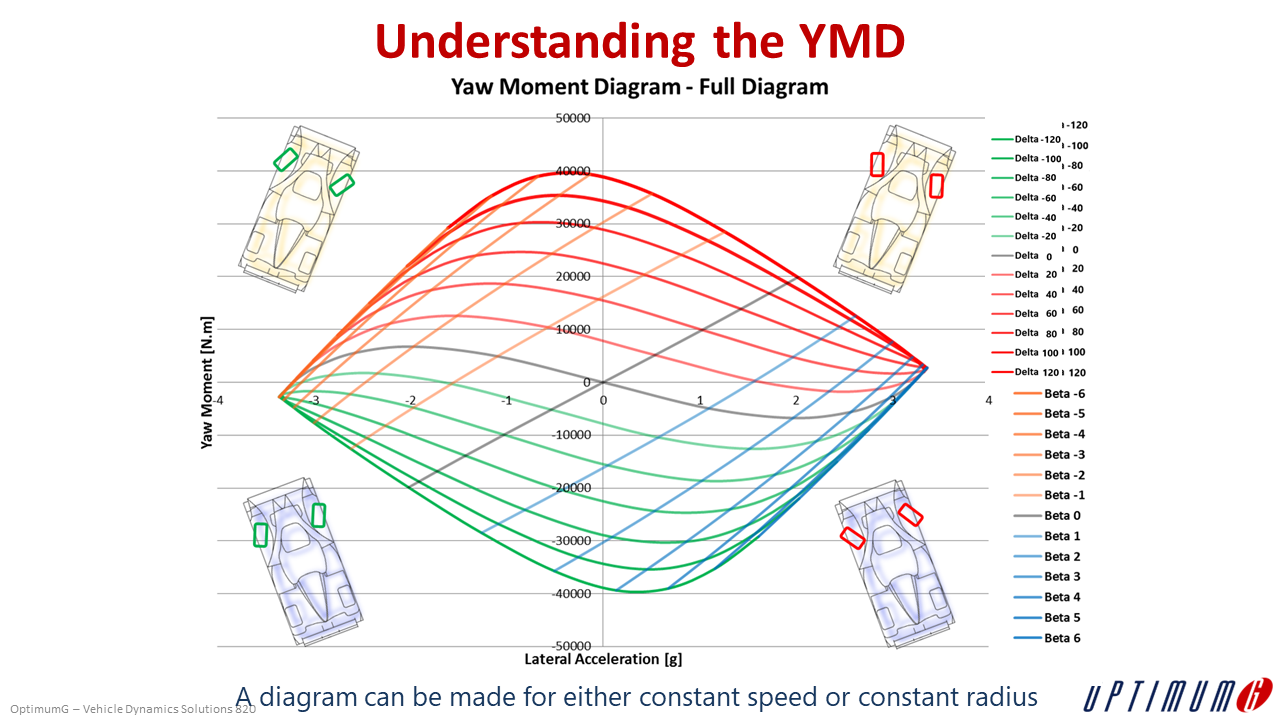
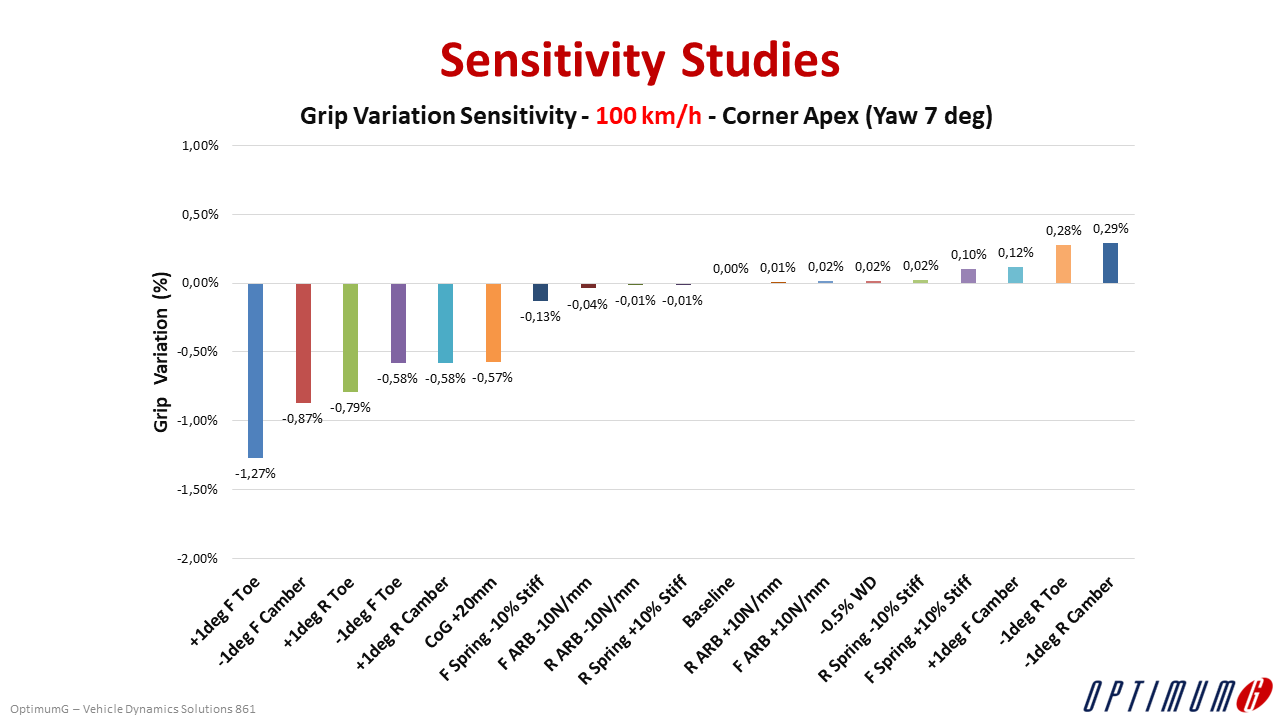
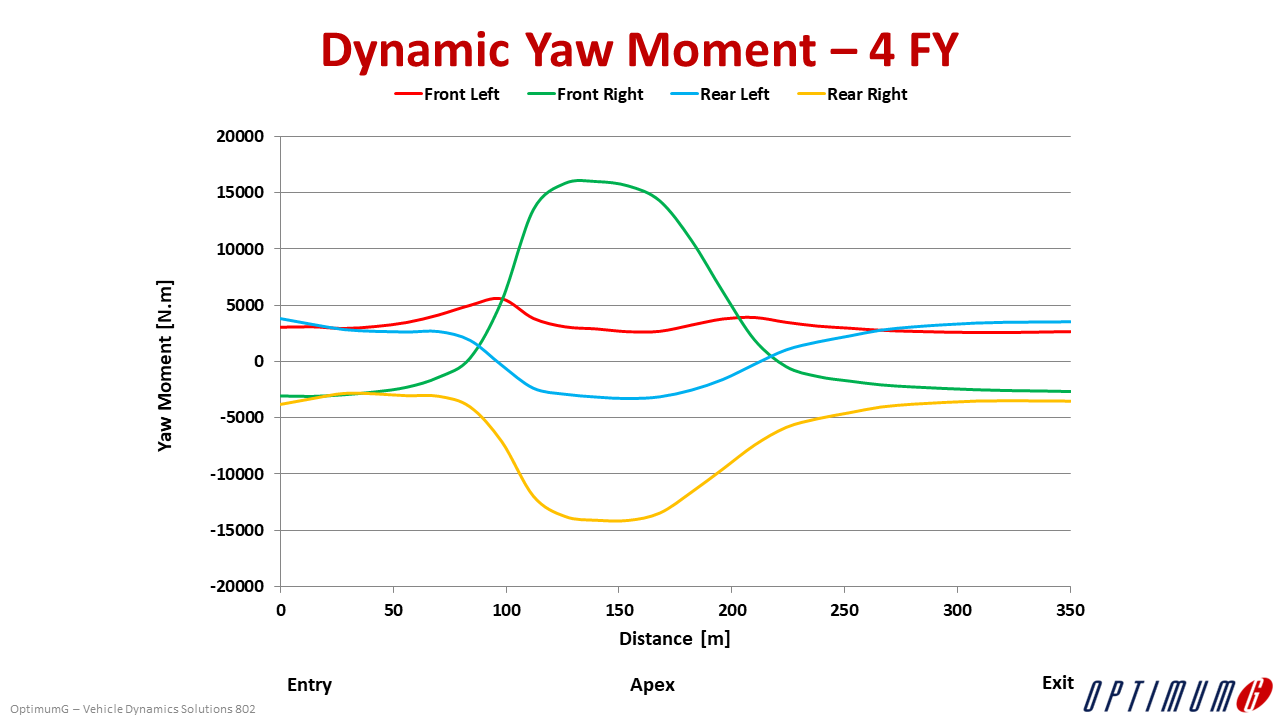
Description illustrated with some of the seminar slides)

Performance Definition

What makes a car go fast in a corner, and what allows a car to get in and out of a corner quickly?
As a short introduction to the seminar, the participants and Claude Rouelle will share their perspectives on steady-state and transient performance definitions.

Tires

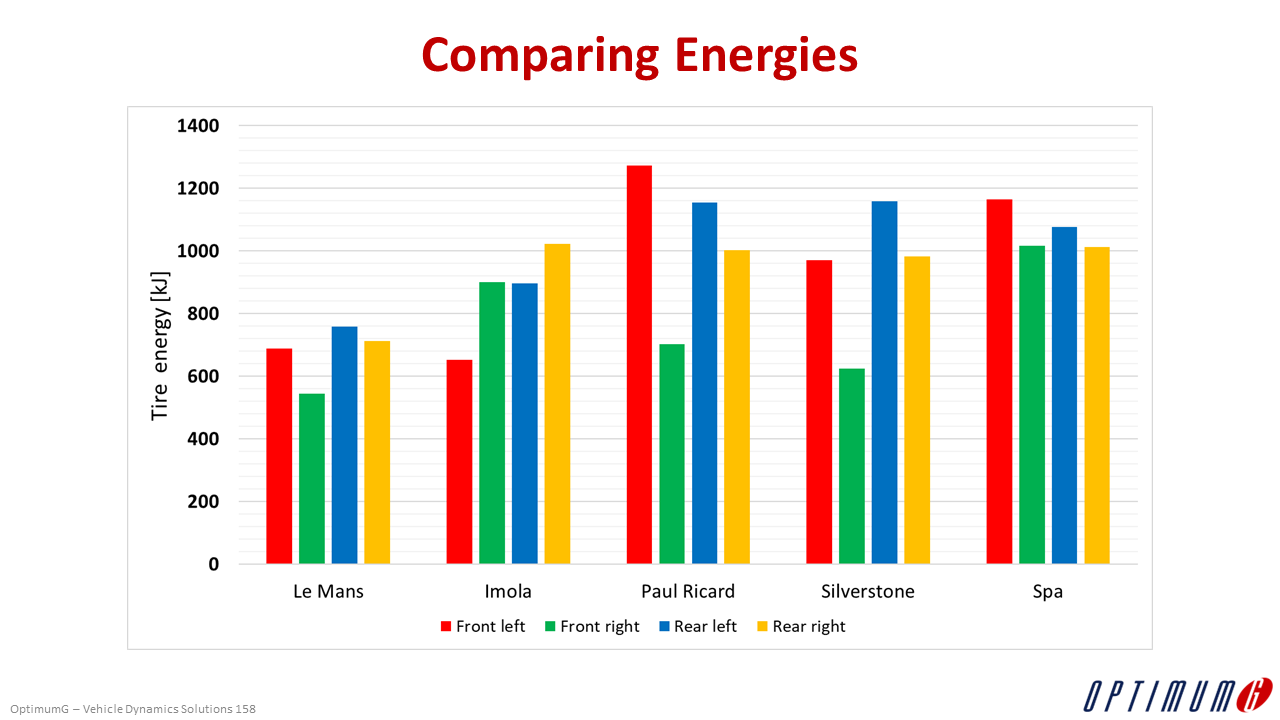
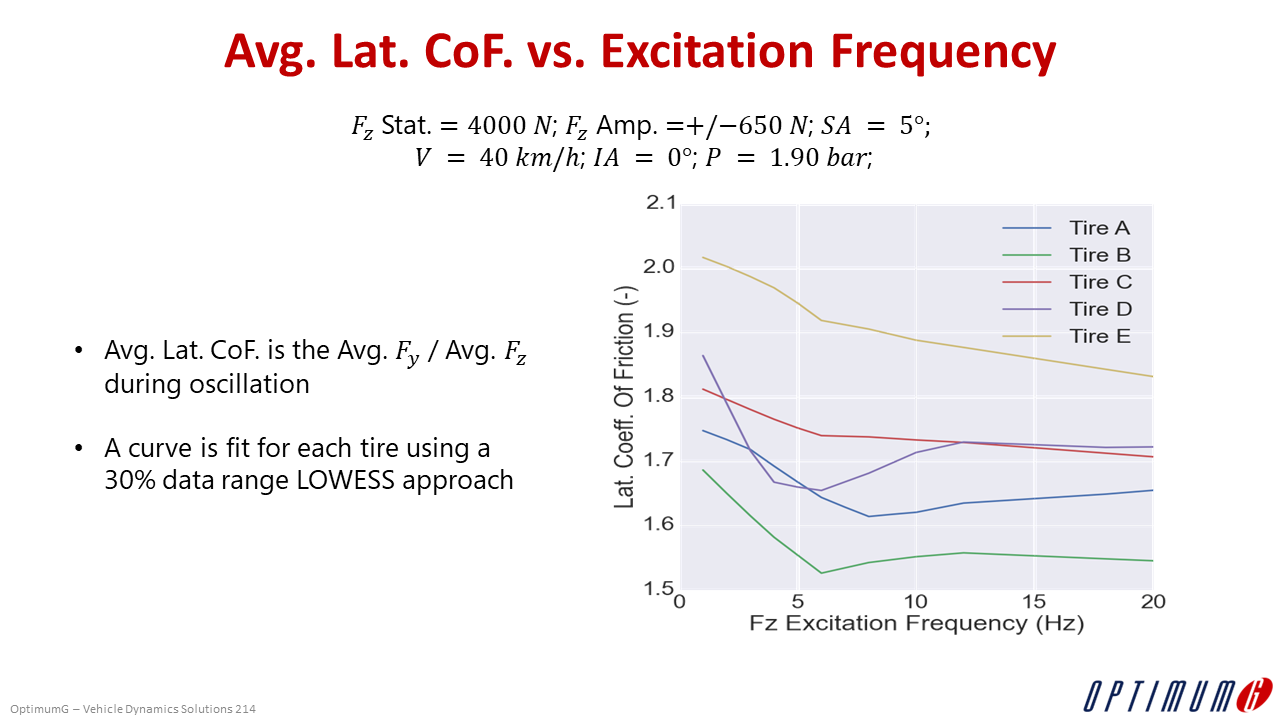
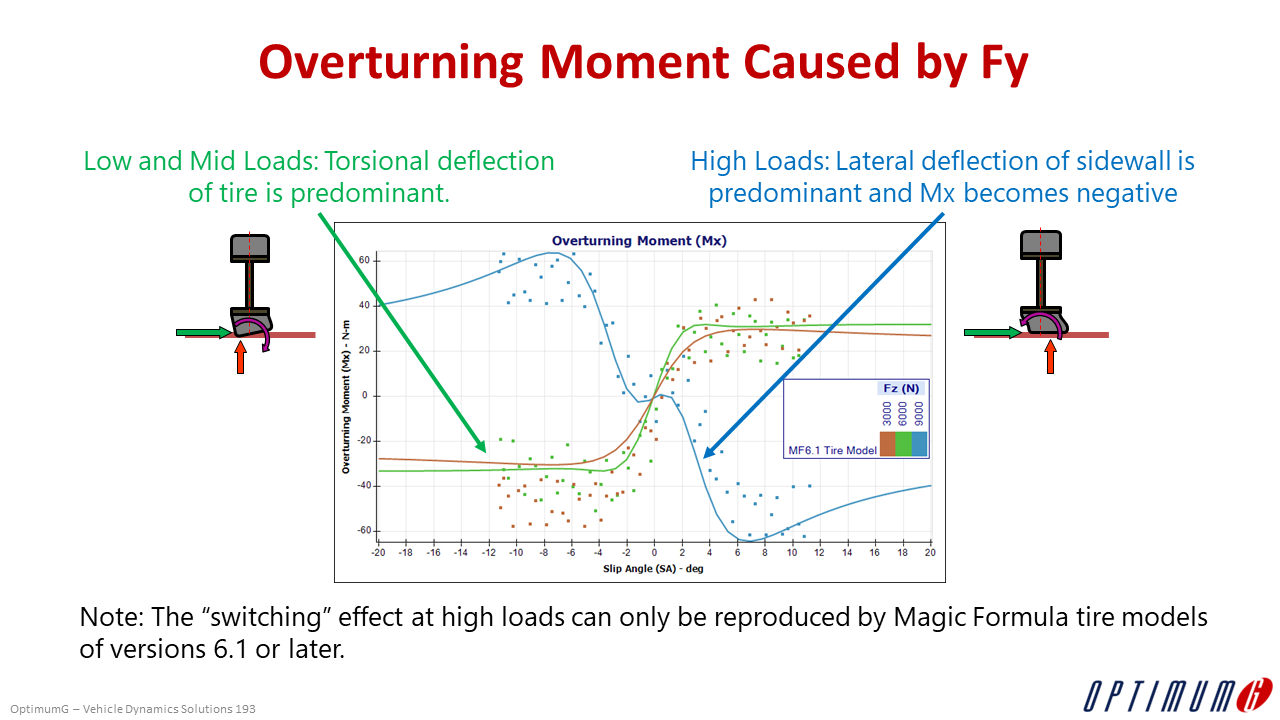
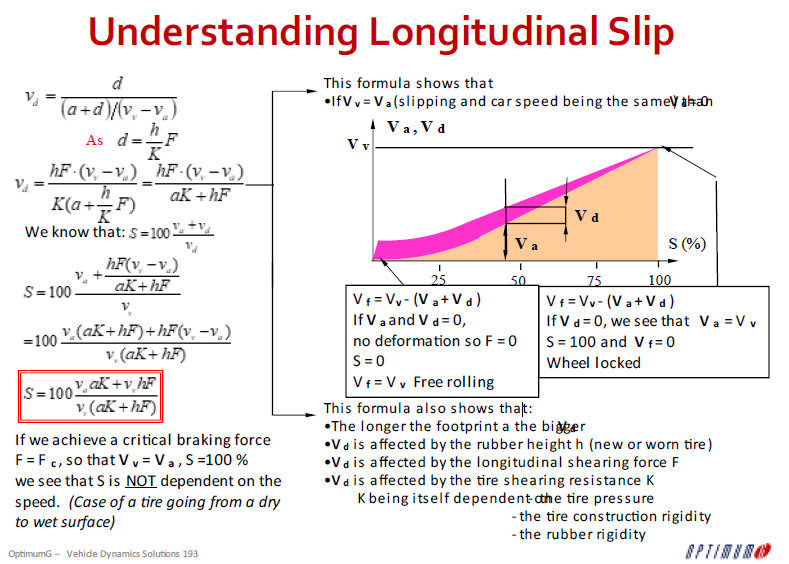
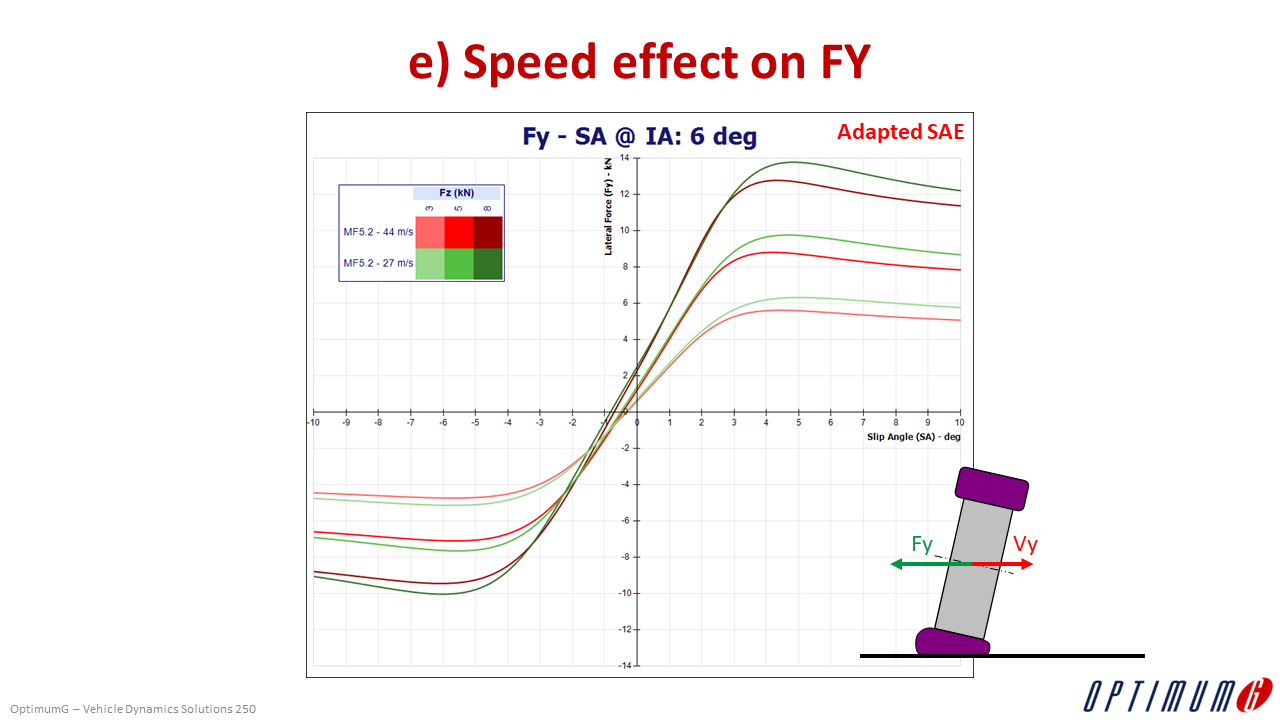
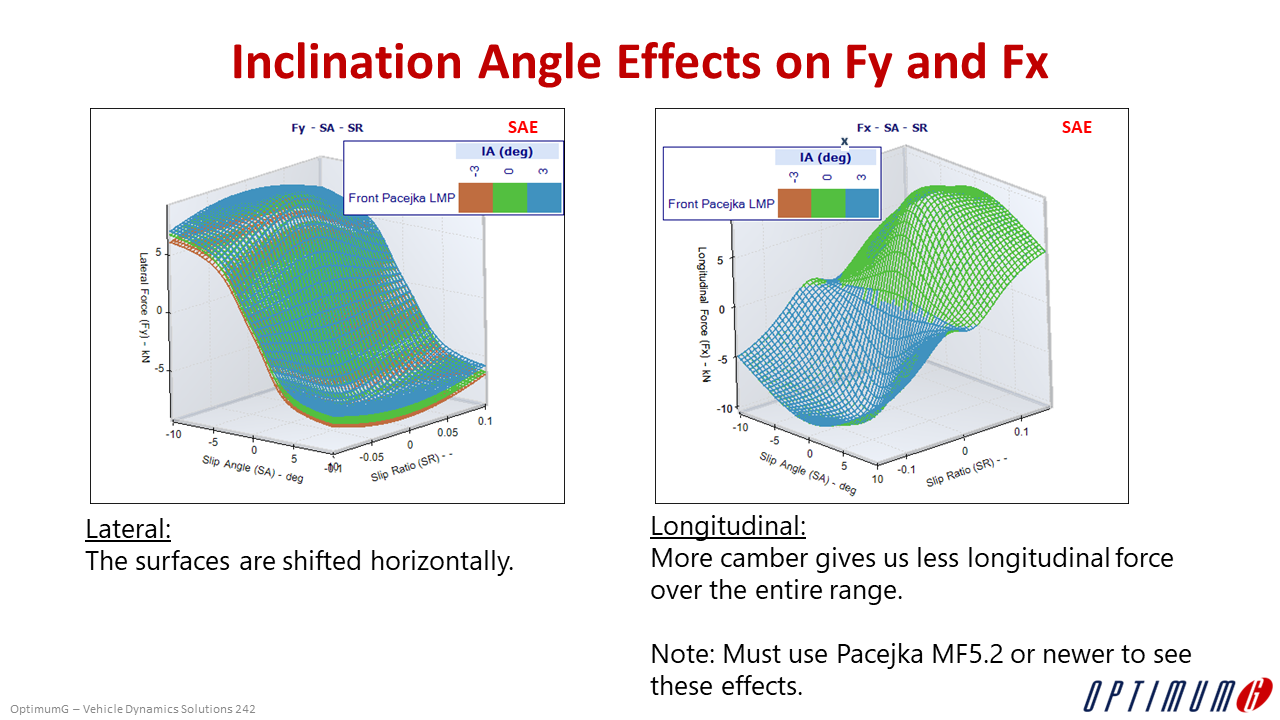
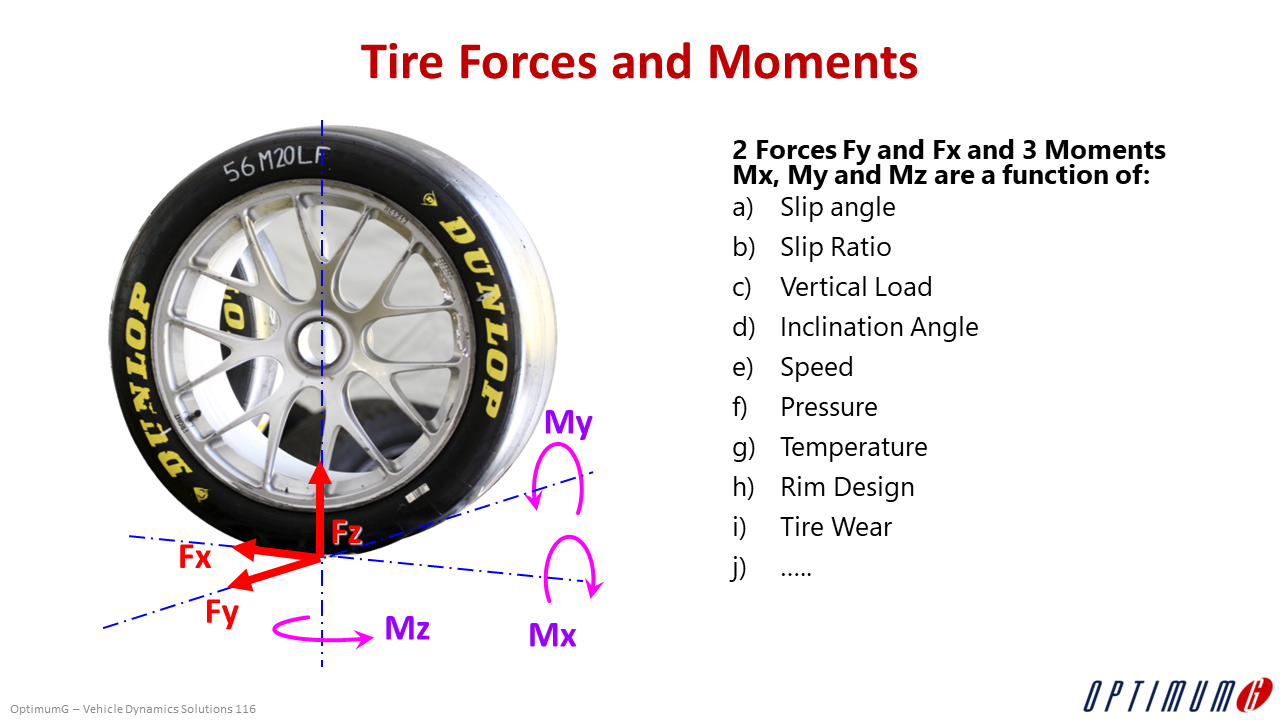
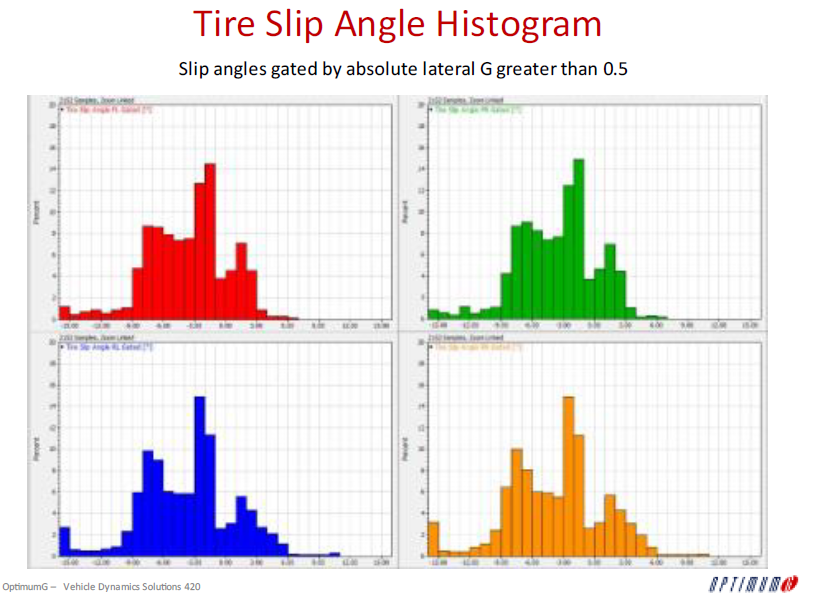
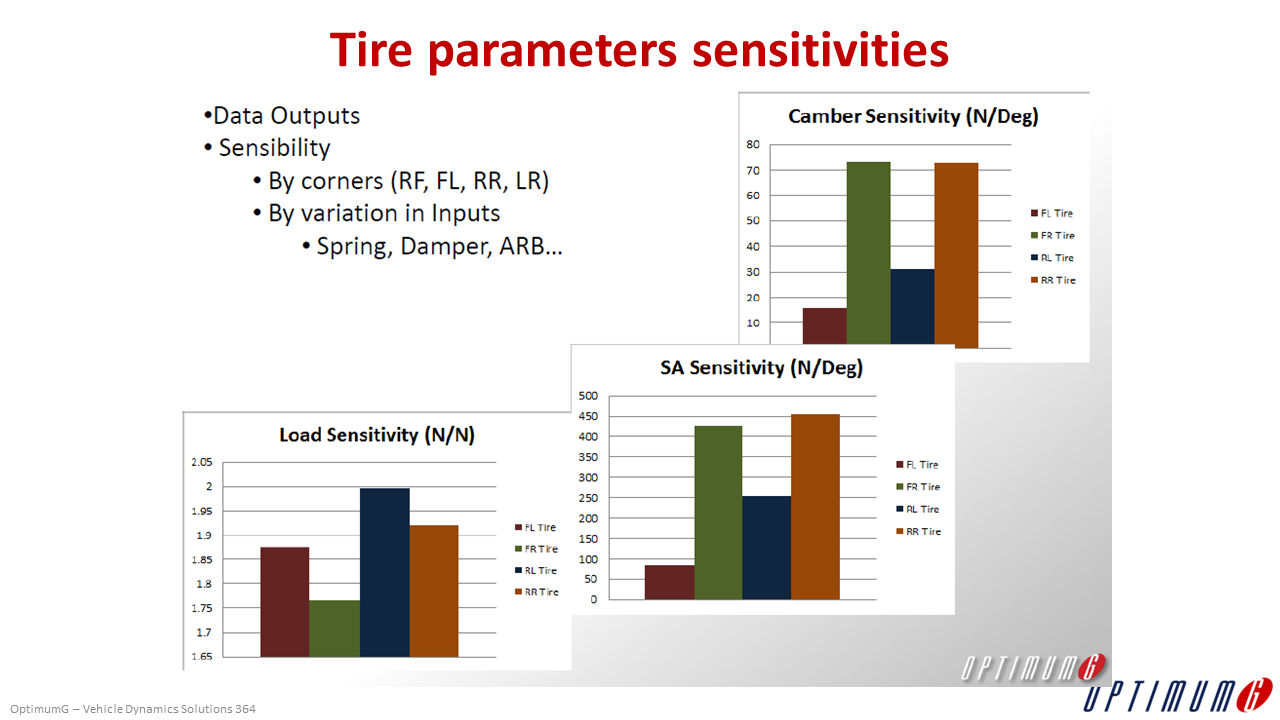
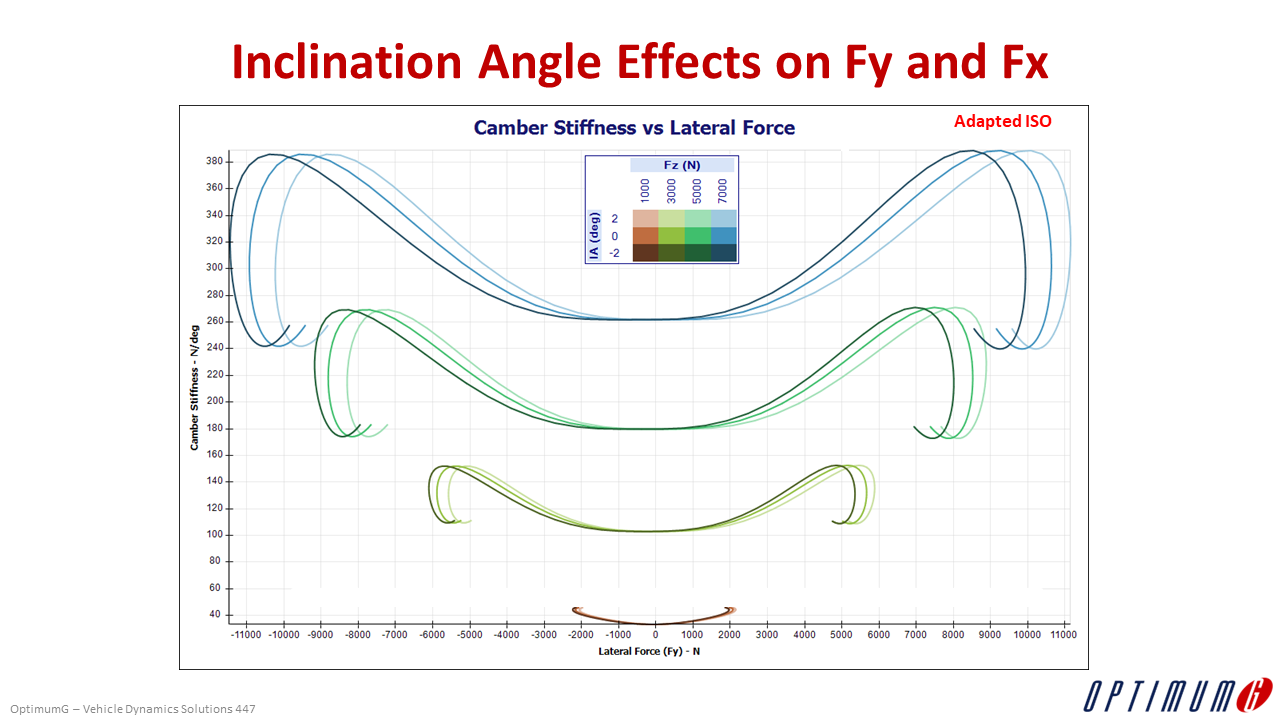
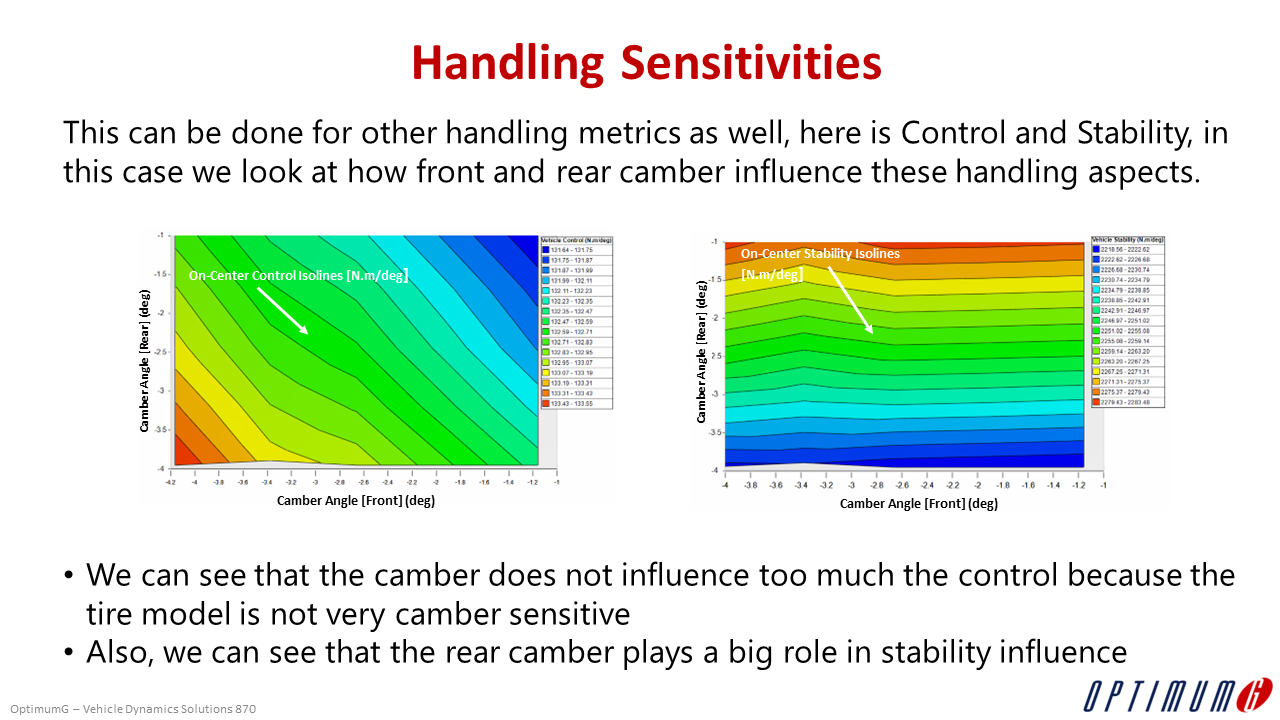
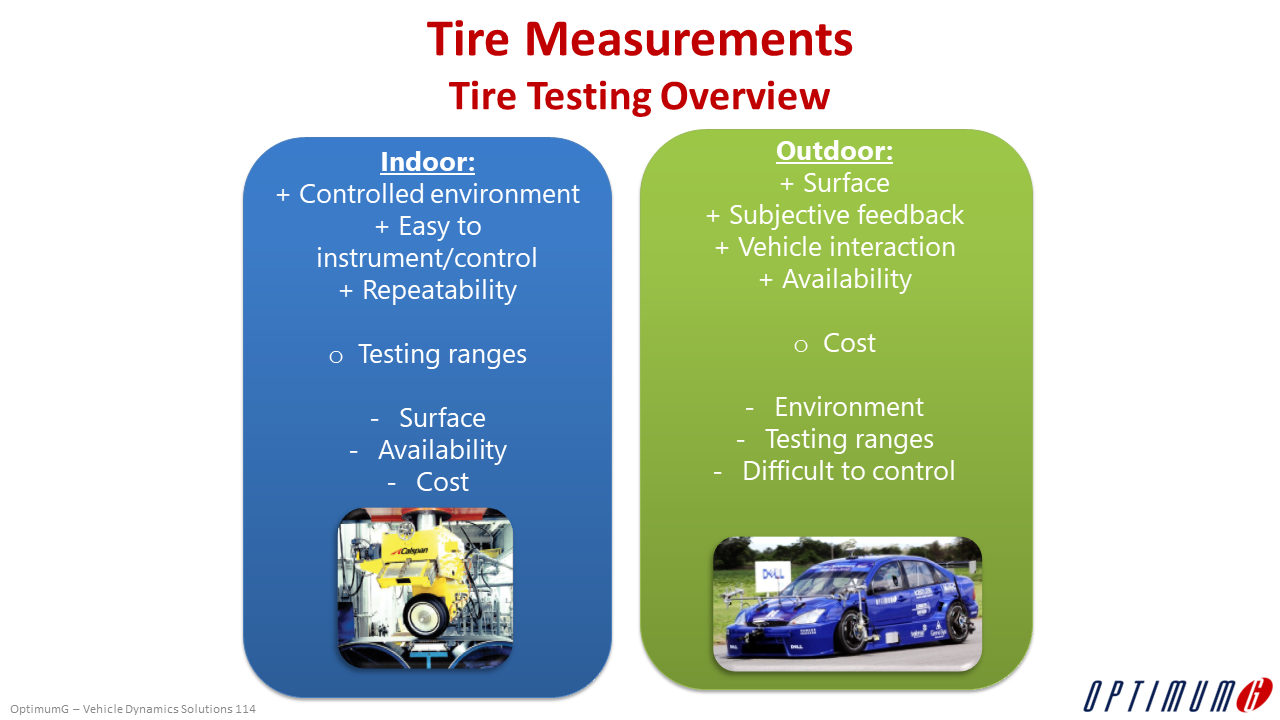
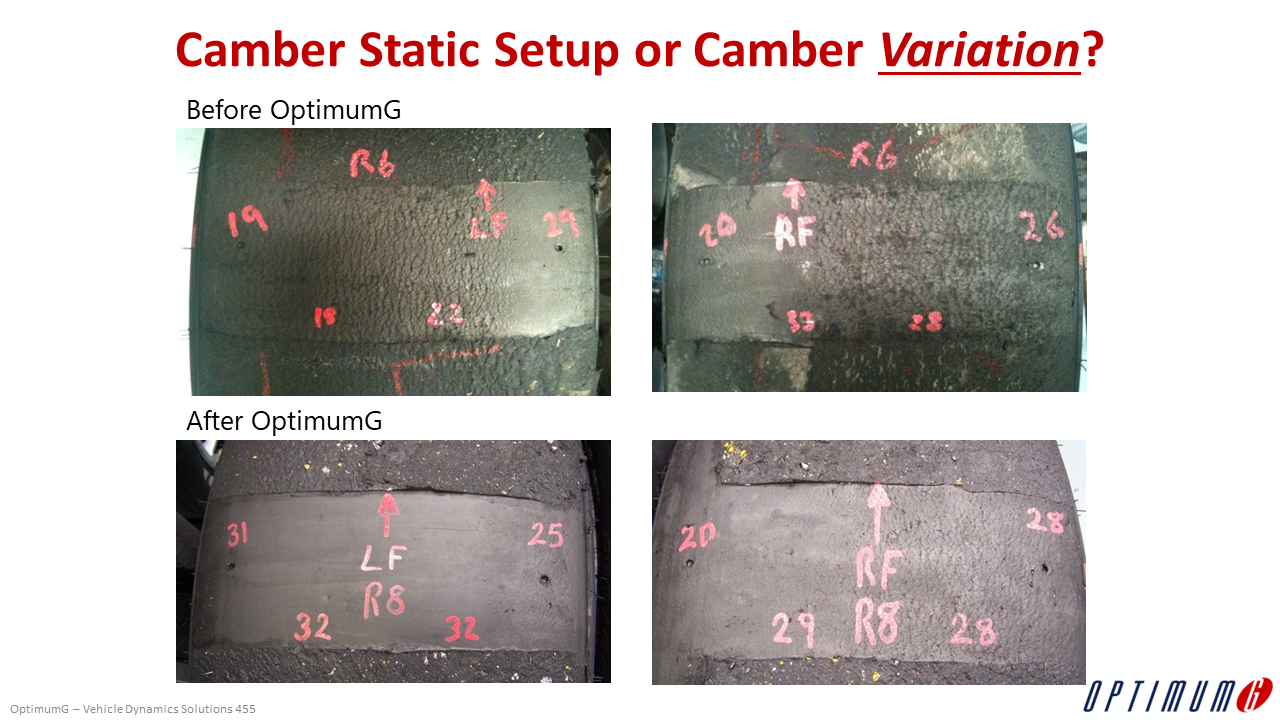
Understand “why” and “how much” the grip, balance, and performance of a car are decided by the forces and moments generated in the tire contact patch. We will study the influence of lateral and longitudinal slip, vertical load, camber, speed, pressure, and temperature as well as these combined inputs on lateral, longitudinal, and combined accelerations, balance, and driver feedback. We will also cover in-lab and on-track tire testing, tire modeling as well as the benefits and limitations of tire models as input of simulation software.

Steady State Fundamentals

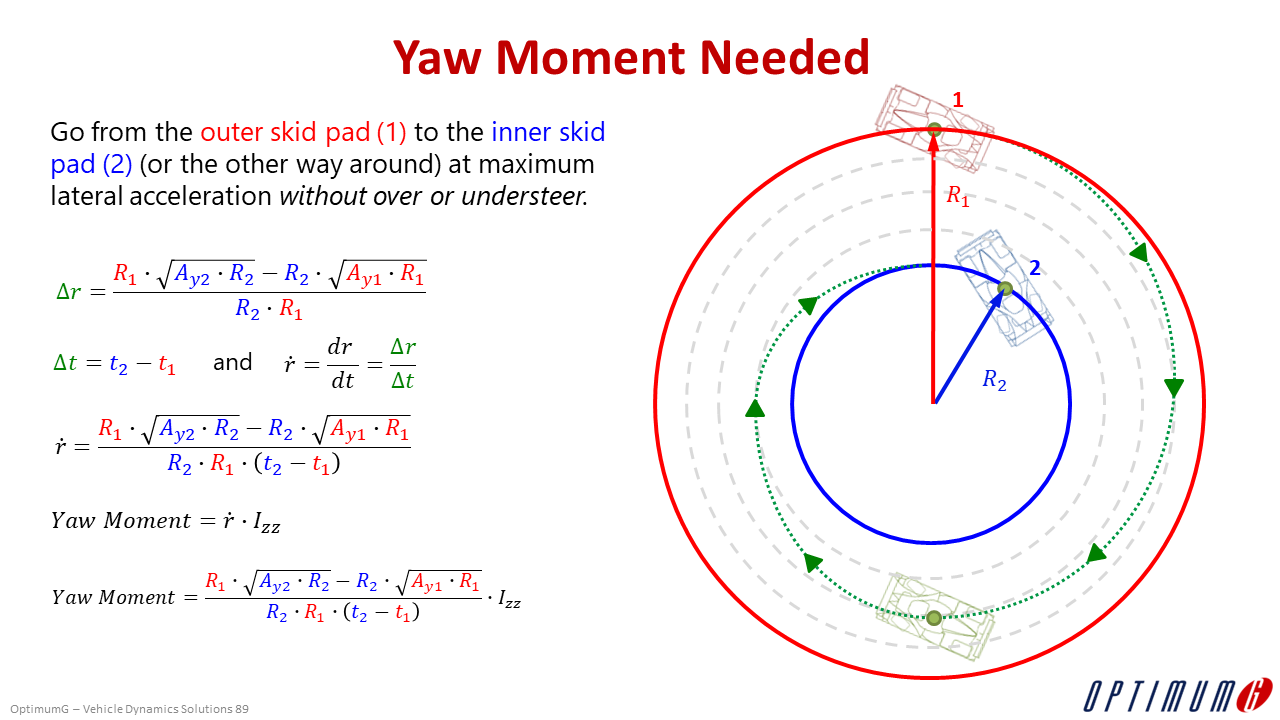
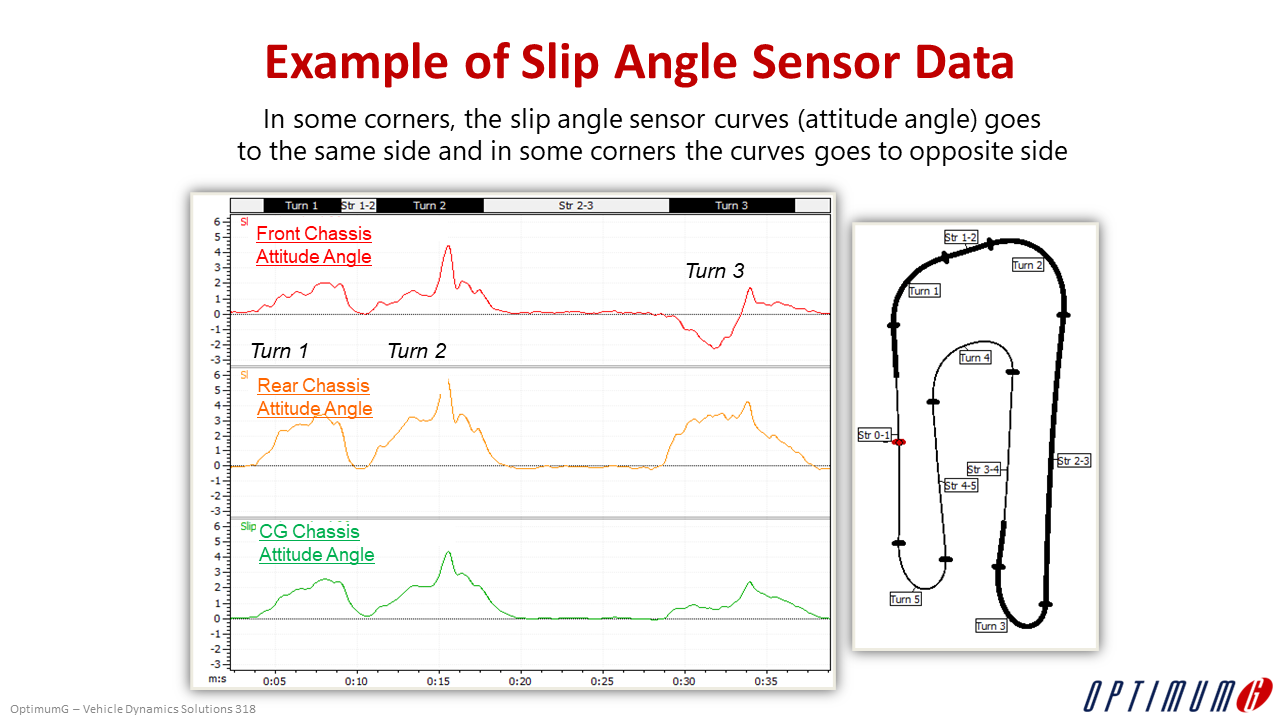
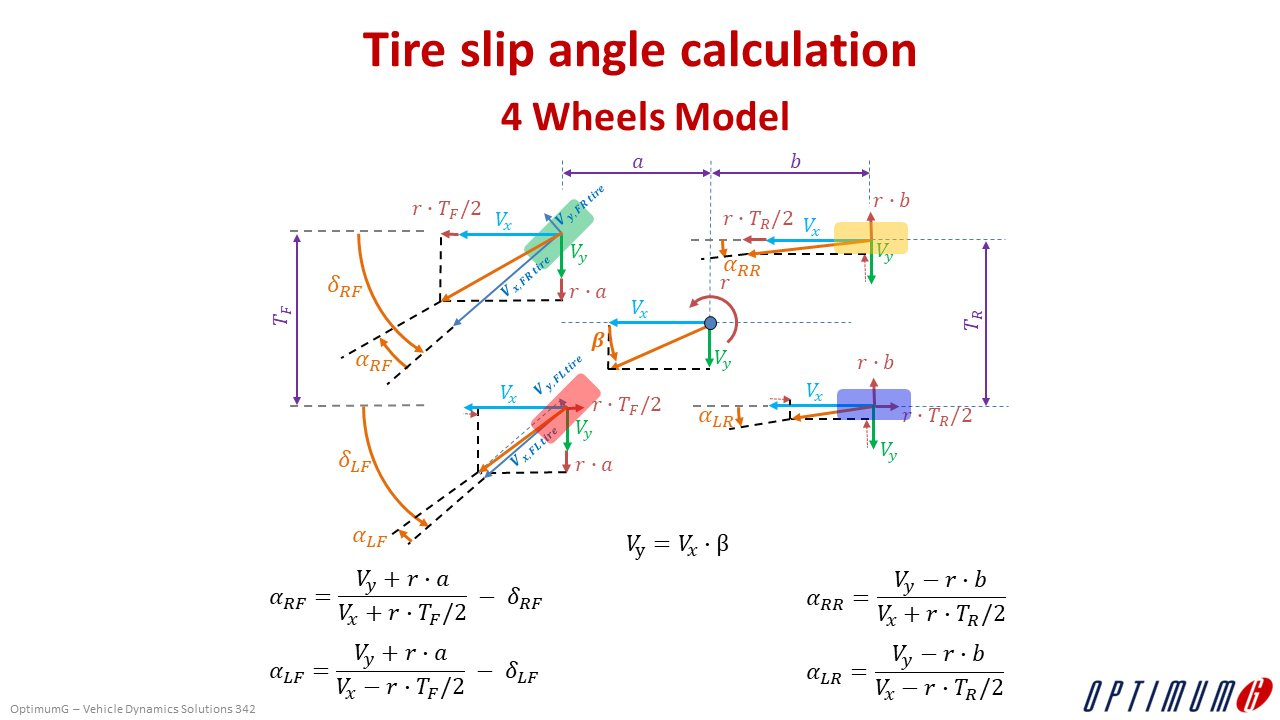
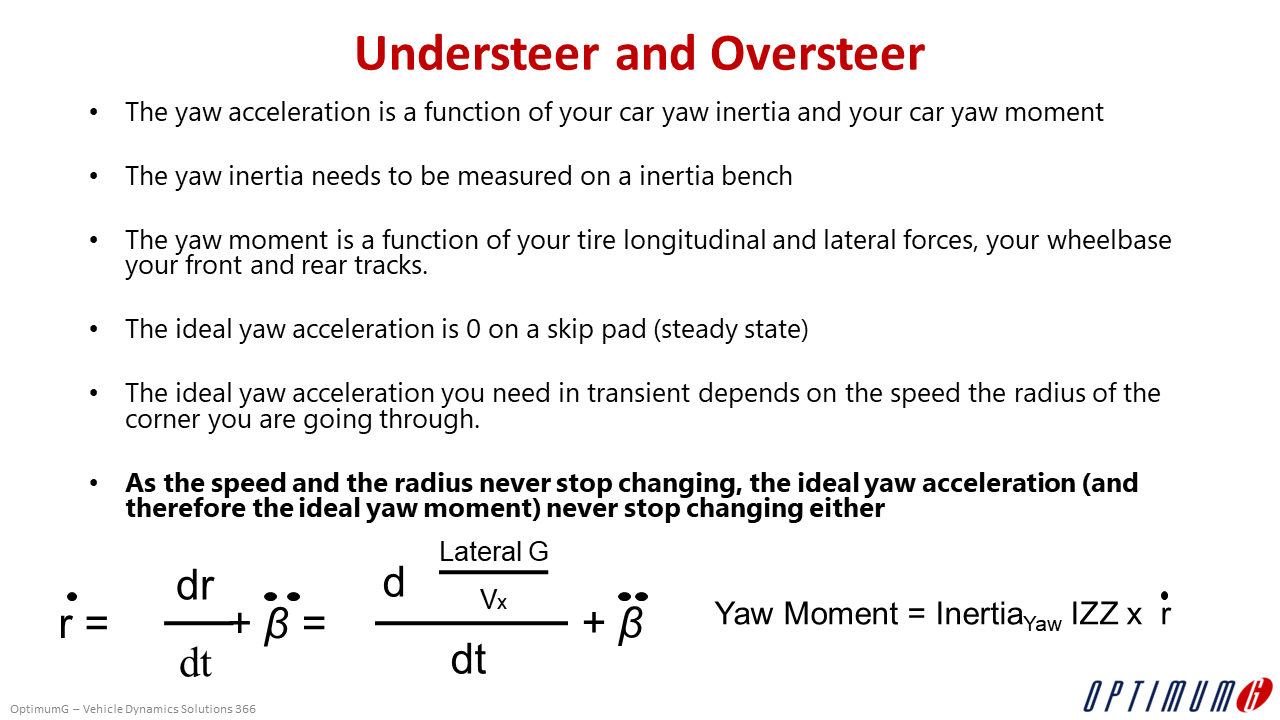
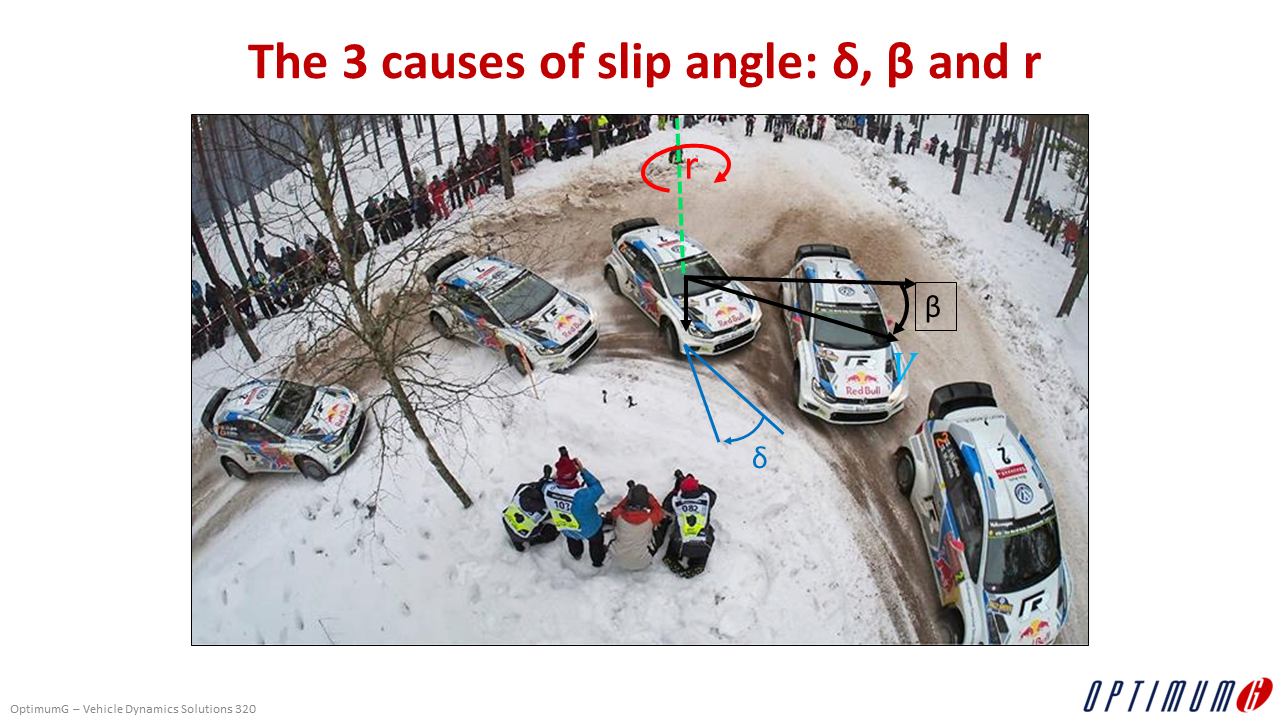
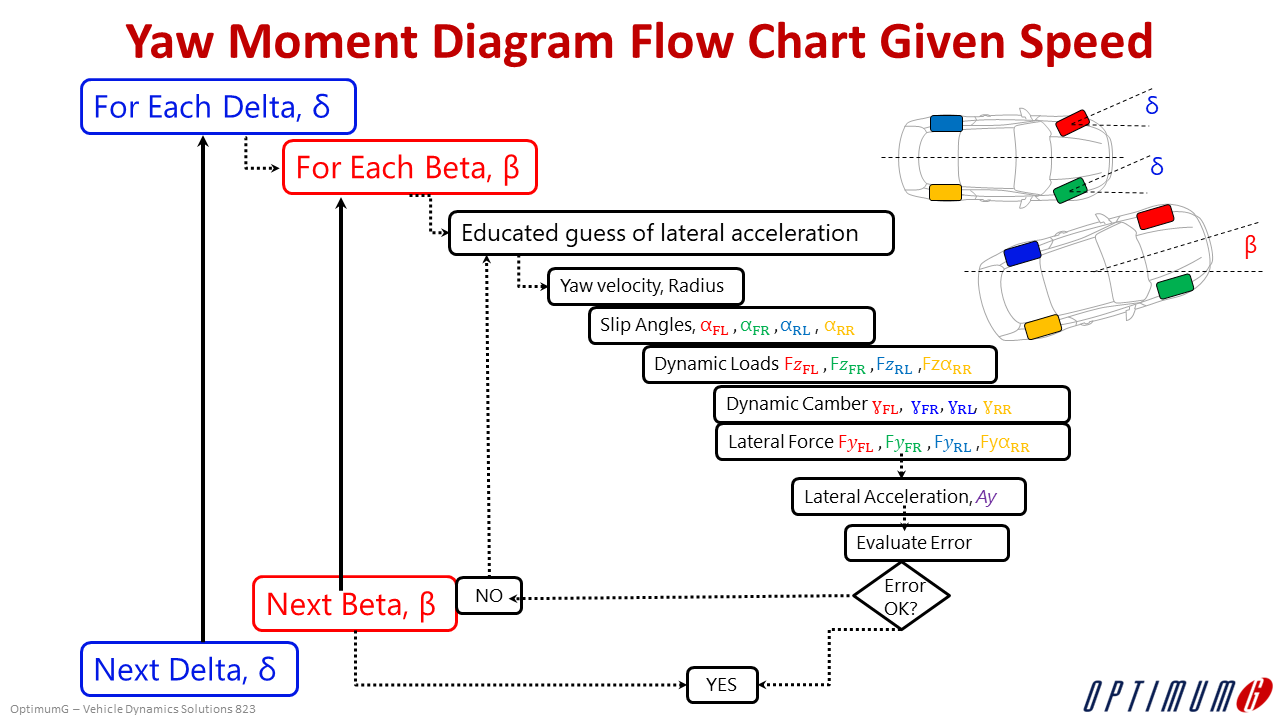
The review of simple equations of motion will focus on the first definition and quantification of understeer and oversteer. The practical meaning of these equations will help us to evaluate the contribution of CG slip angle, yaw rate, and steering to lateral acceleration and yaw moment.

Aerodynamics

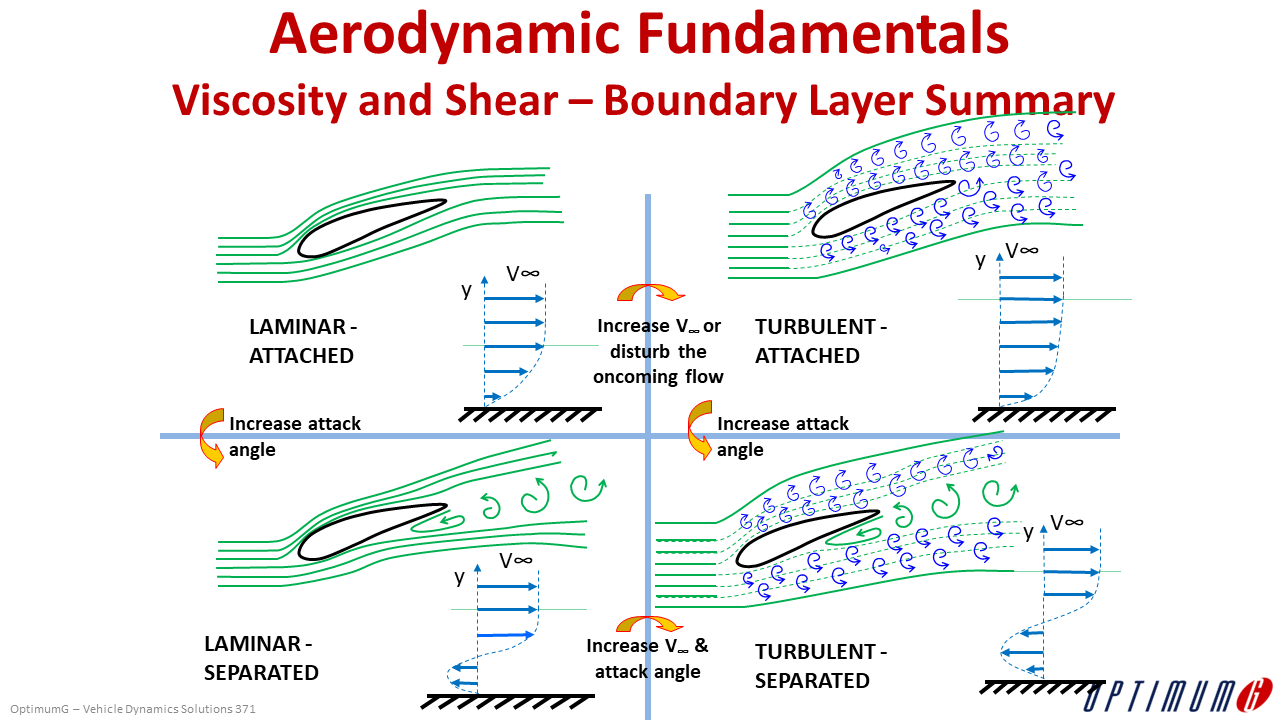
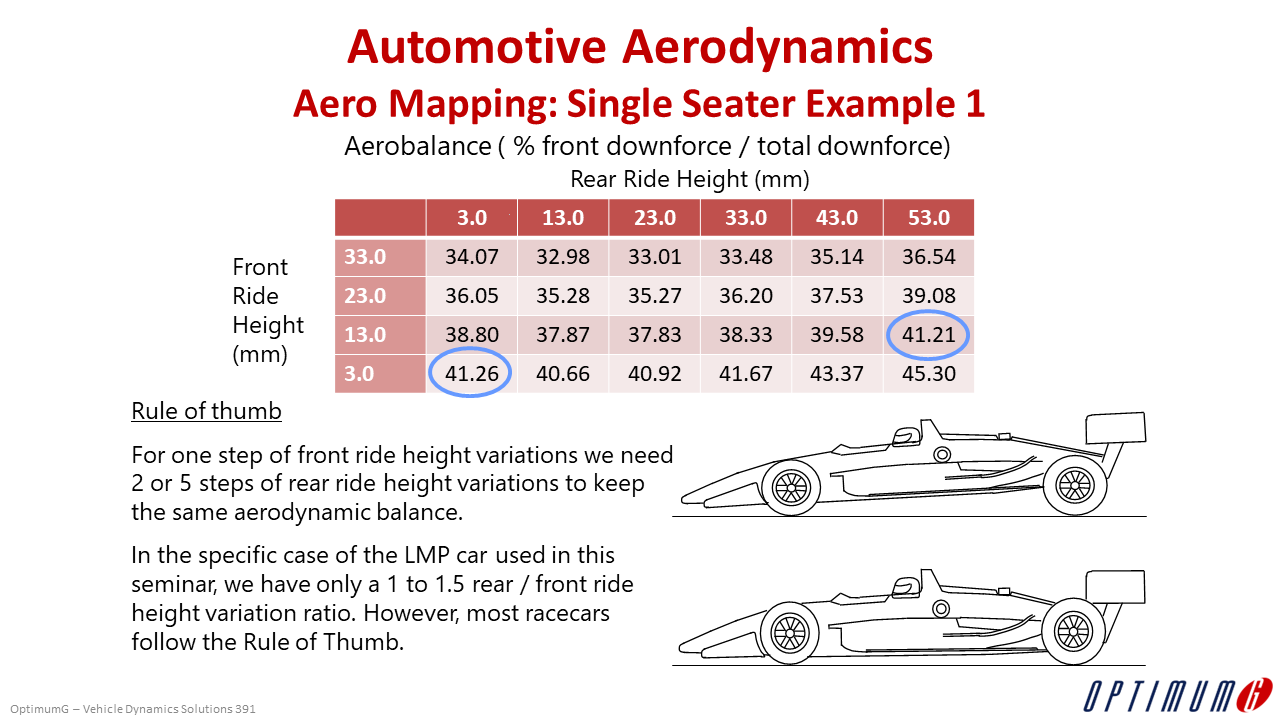
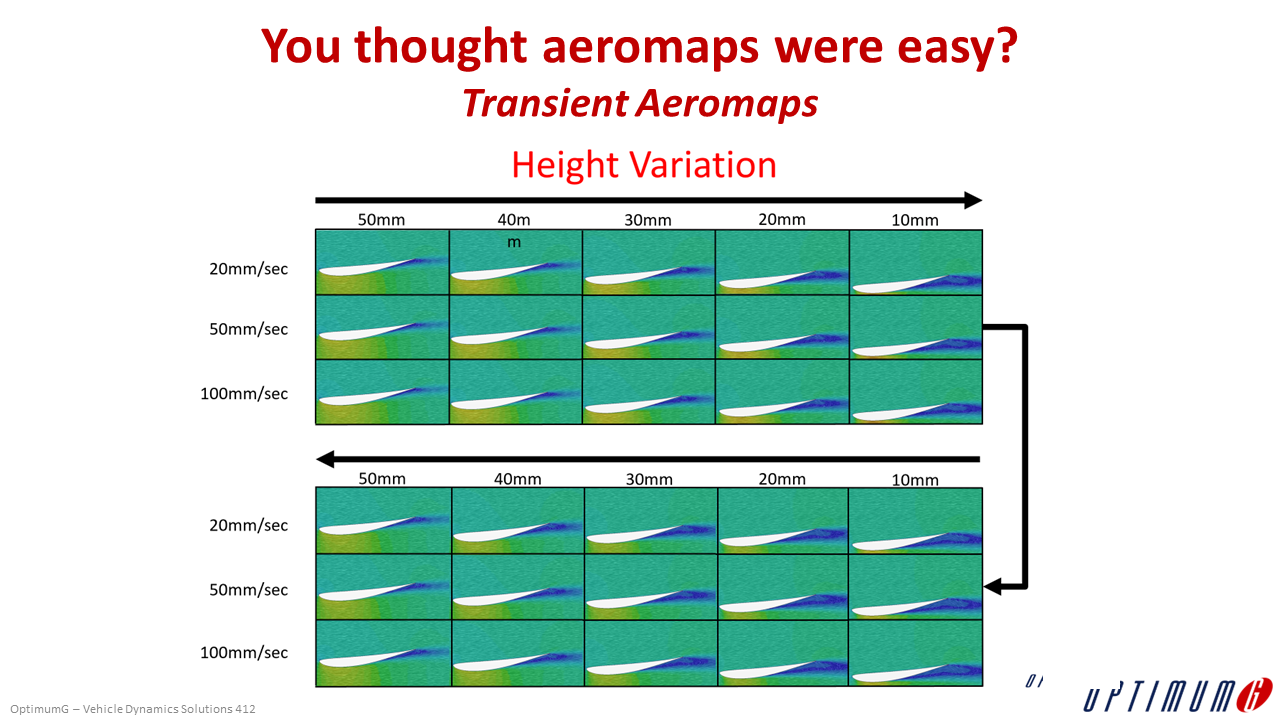
After a review of aerodynamics basics, we will focus on the understanding of aero-maps static and dynamic ride height settings, and how to integrate them into the design of a suspension and the choice of suspension stiffness and damping.

Kinematics

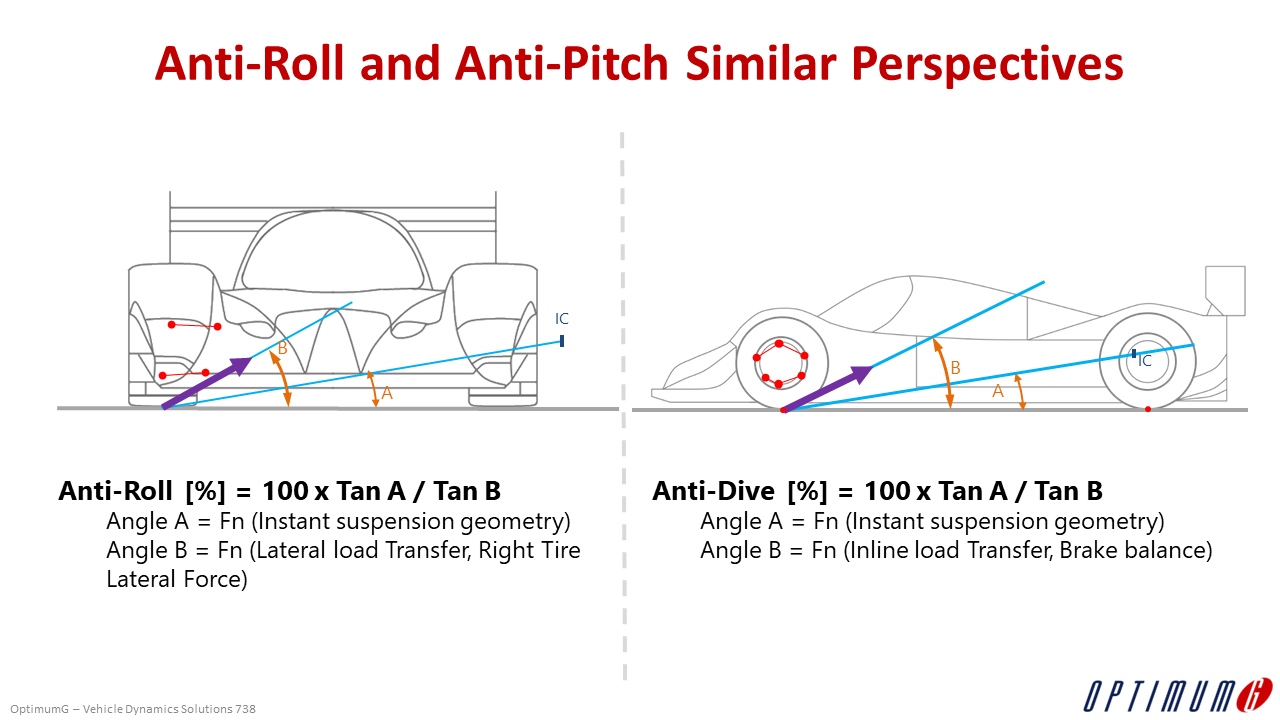
See why poorly designed kinematics cannot be “patched” by springs, anti-roll bars, and dampers. From the design to on-track testing and racing, understanding the effects of kinematics is essential to the efficient use of race tires.
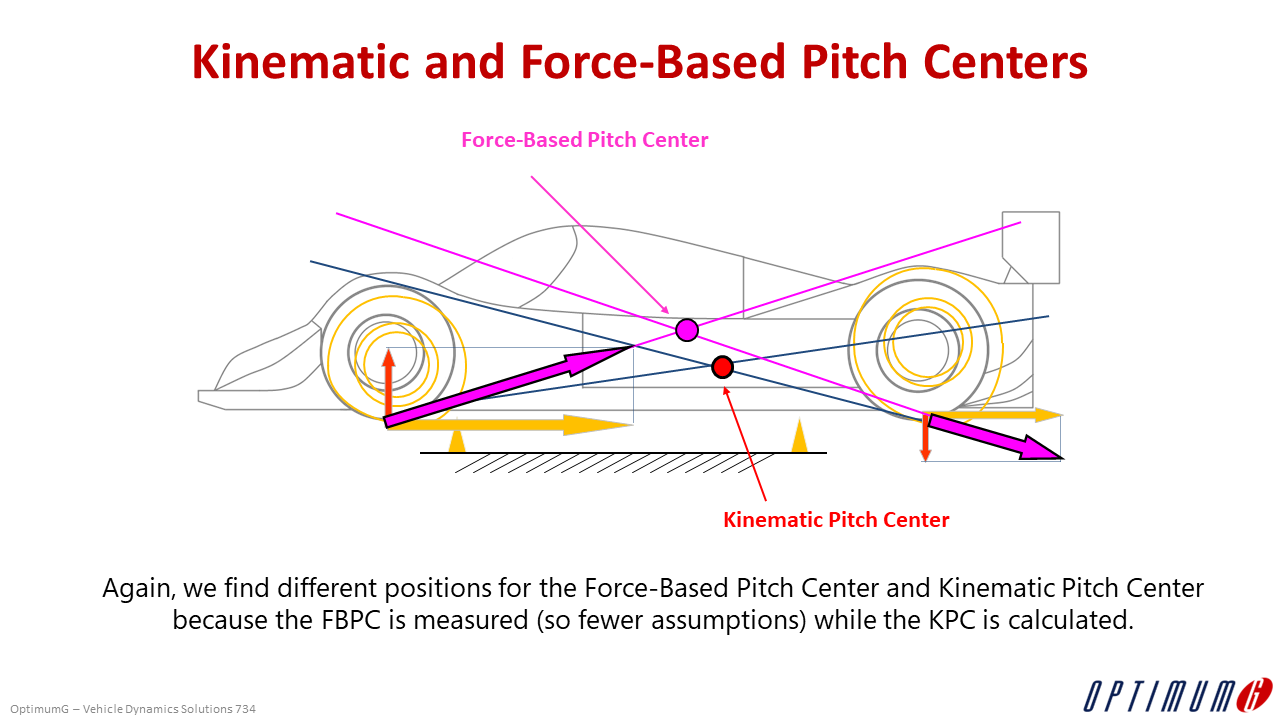
Examples of tire model exploitation for suspension camber variation and steering kinematics design will be given. With examples of K&C measurements and tire models, we will also explain the essential differences between kinematic and force roll and pitch centers.

Load Transfer

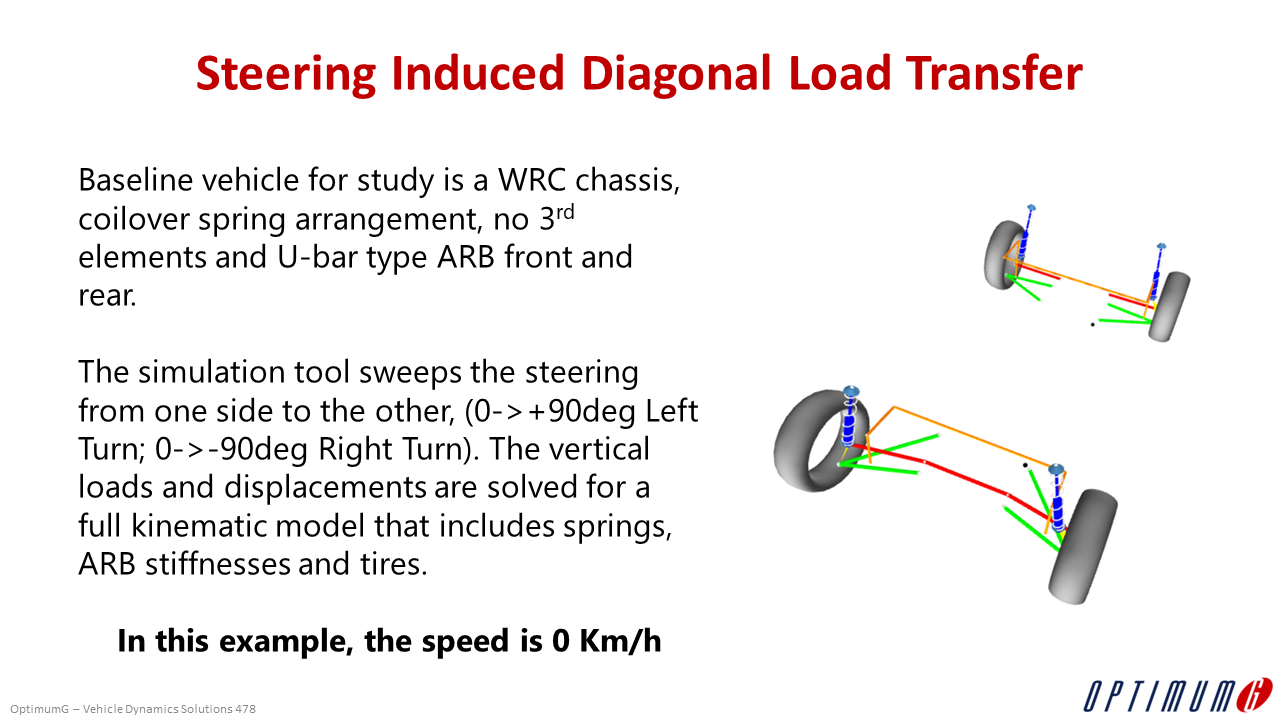
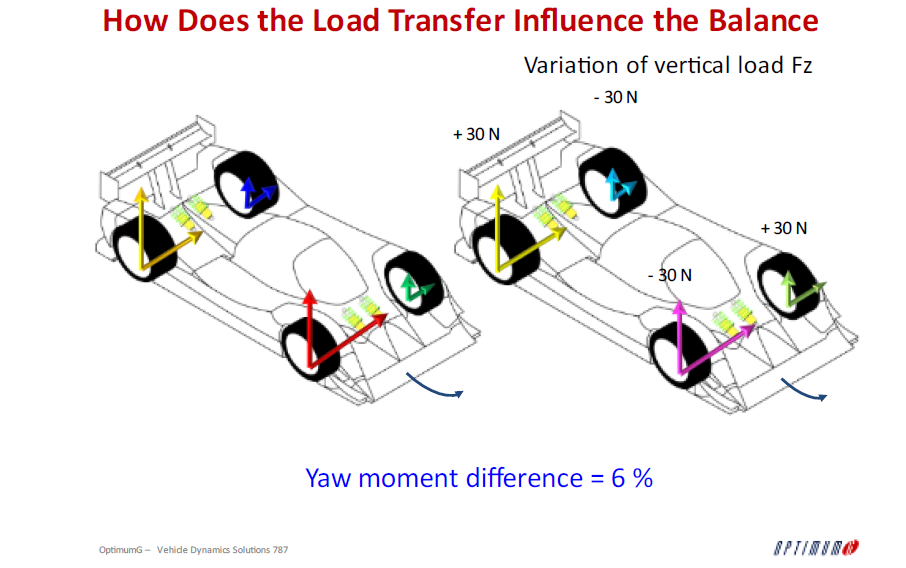
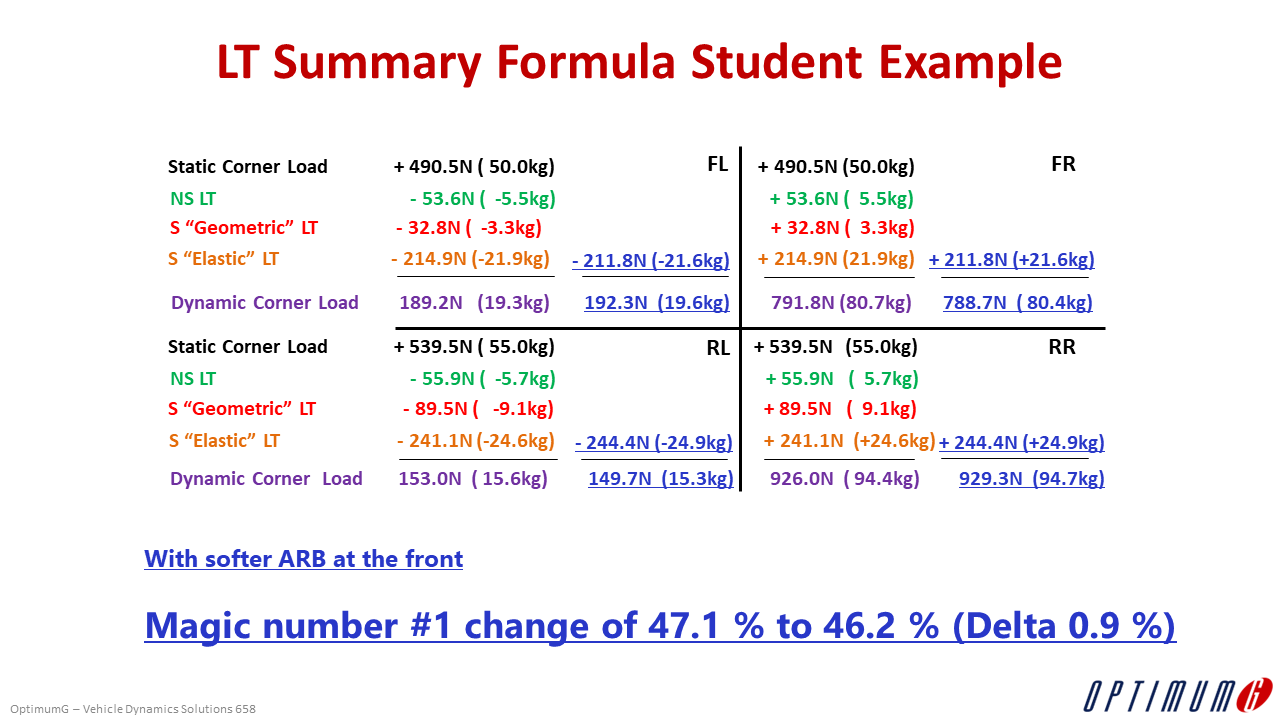
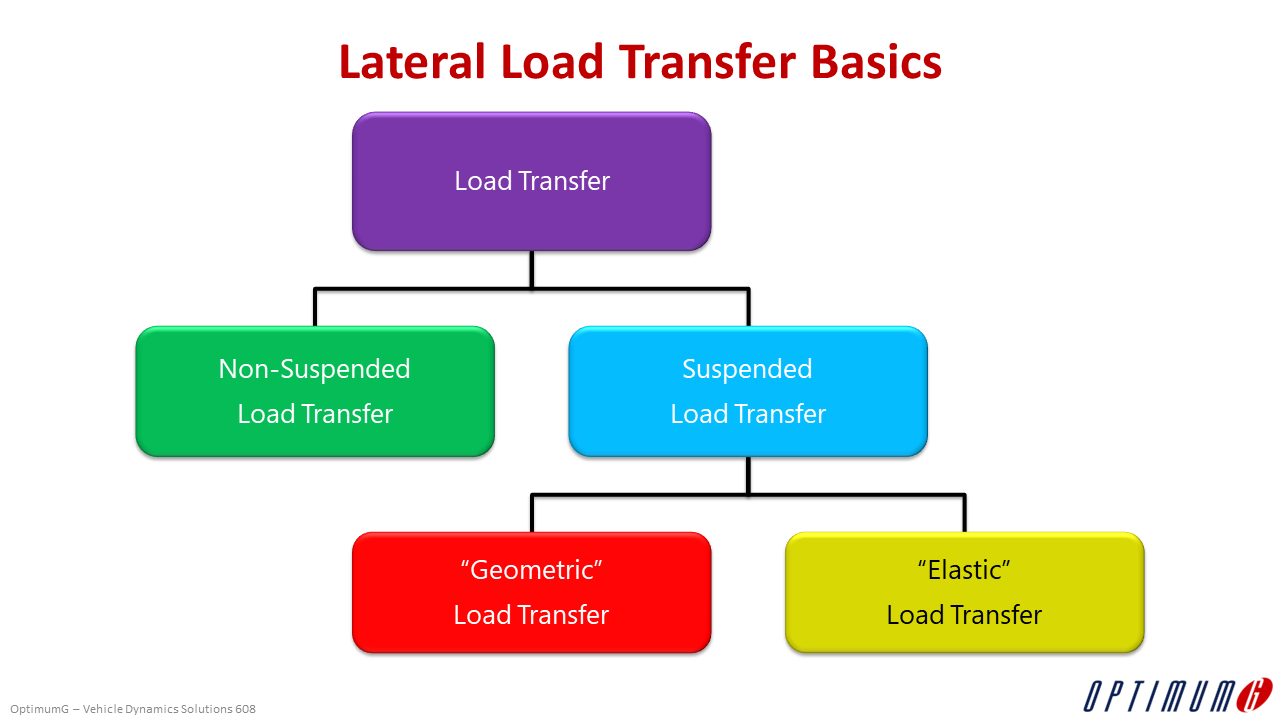
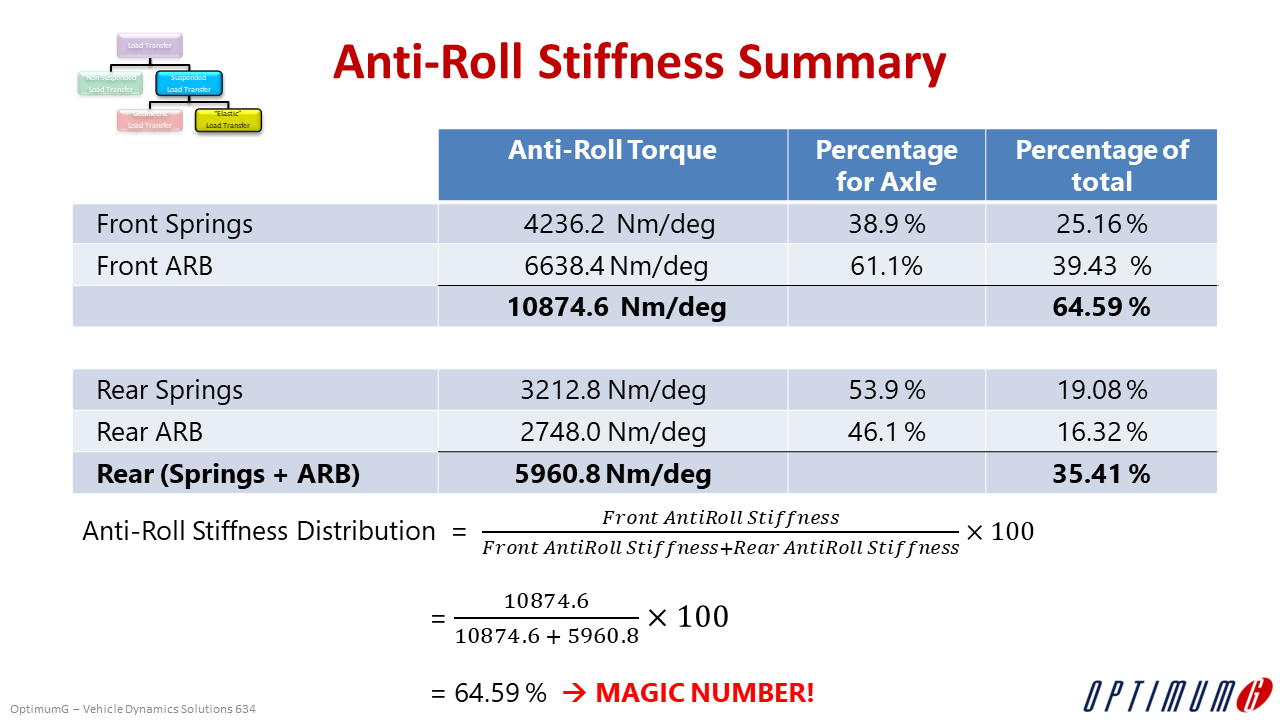
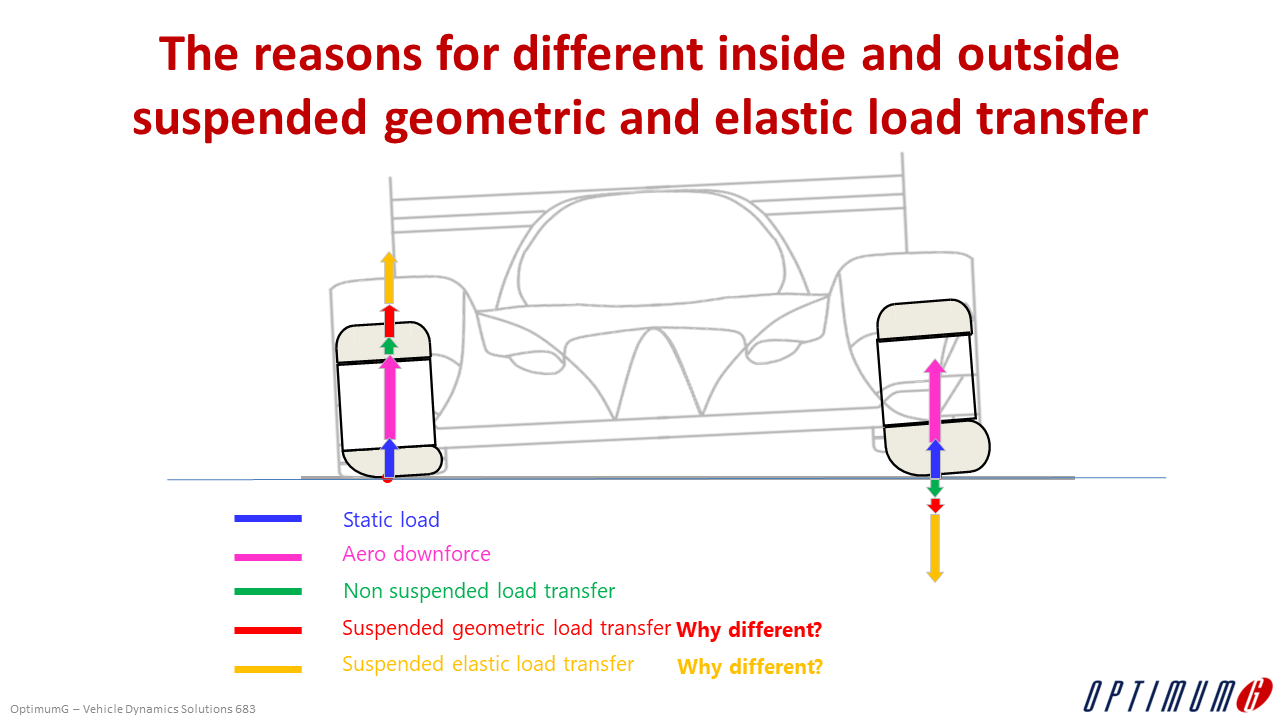
Understand, step-by-step, the load transfer calculation in steady state. See the influence of springs and anti-roll bars on weight transfer distribution, as well as the influence of tire vertical stiffness and chassis torsional stiffness.
You will get a guided exercise on weight transfer calculations under combined lateral and longitudinal accelerations.

Damping, Ride, Transient Weight Transfer, and Tire Grip Consistency

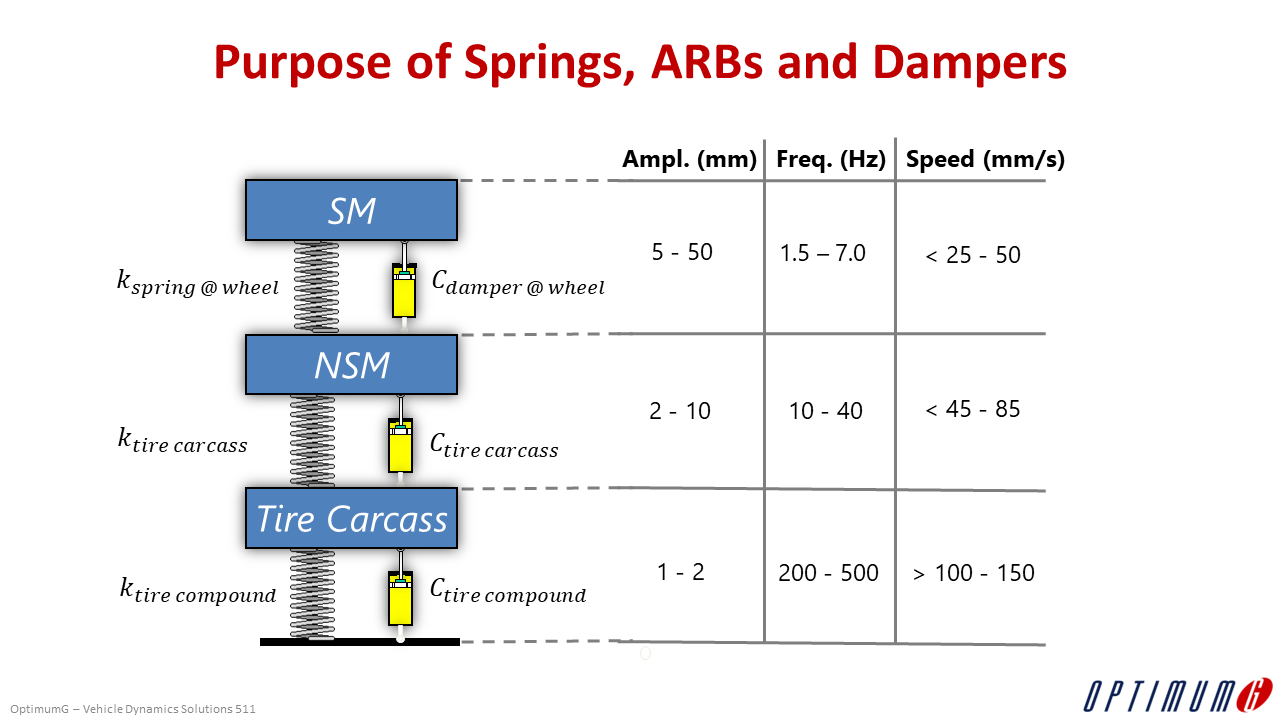
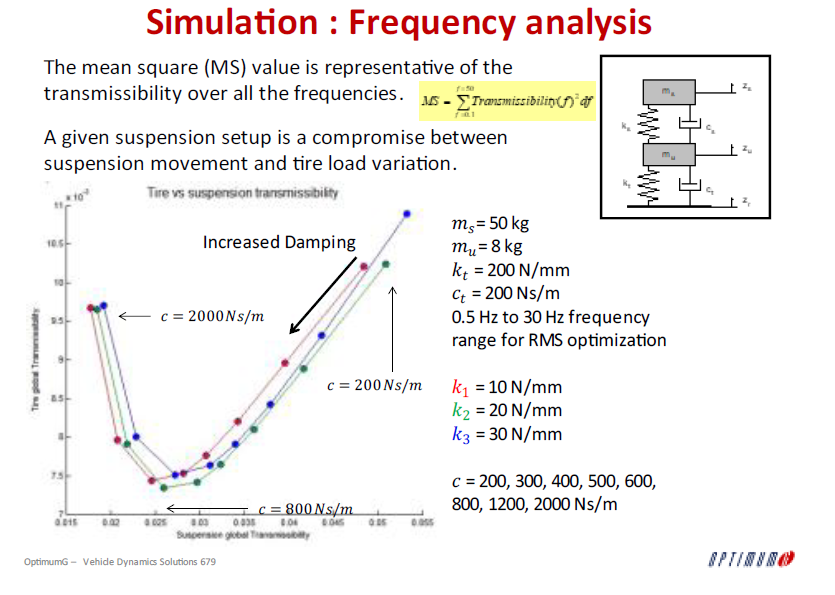
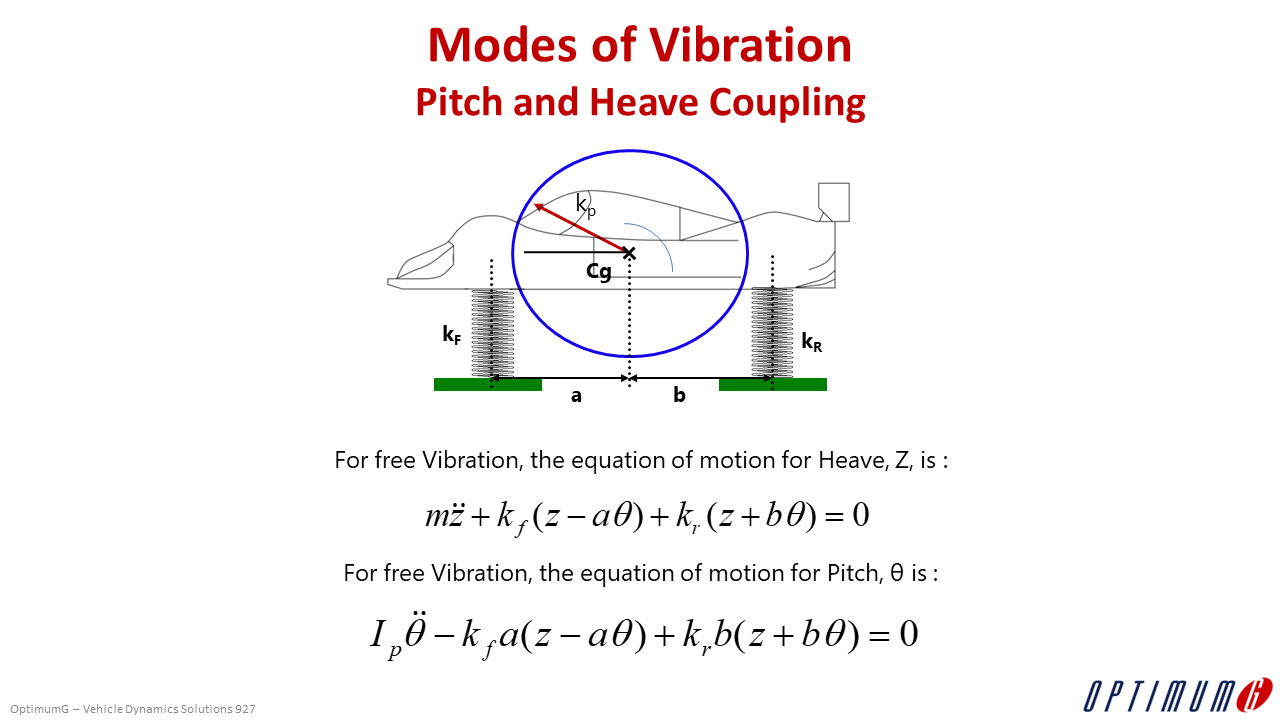
After a brief description of damper technology, we will focus on the damper settings’ influence on tire load, tire load consistency, and racecar performance. A guide exercise related to heave, roll, and pitch stiffness and damping as well as selection and theoretical and empirical fine-tuning of these suspension elements will help the participants considerably diminish the amount of time spent in testing and improve their understanding of simple simulation tools.

Balance and Grip Compromise: Simulation and on-Track Realities

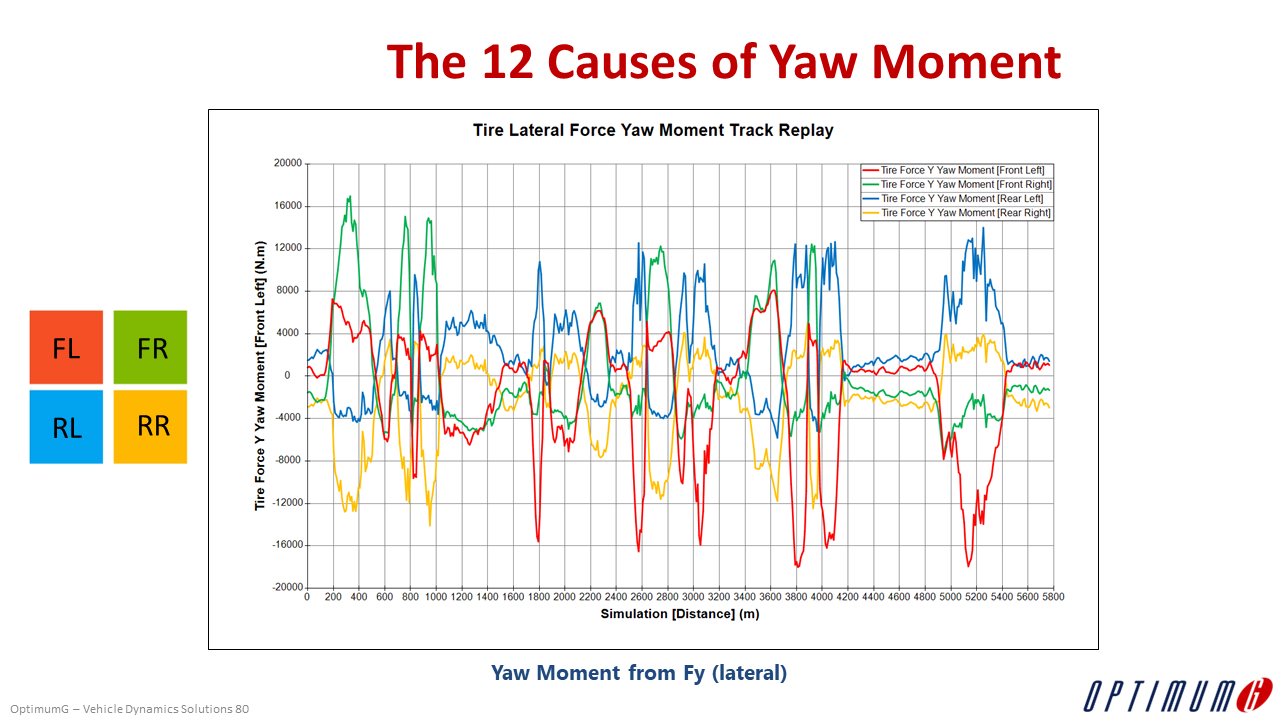
We will share with you how the yaw moment vs. lateral acceleration method can successfully be applied by integrating 3 different inputs: simulation results, objective analysis from acquired data, and subjective driver appreciation through specific driver debriefing methods.
With scientific demonstration and real examples, we will explain how the choice of the car setup parameters and the driving style both influence the car performance and response for given circuits and given corner segments.

Summary

With a balanced combination of theory refresh and shared experience/perspectives, the Applied Vehicle Dynamics to Race
Car Design and Development OptimumG Seminar will help automotive and race engineers to:

  • Acquire new knowledge and perspectives,
  • Have many of their questions answered,
  • Develop new ideas for performance understanding,
  • Appreciate the success and the challenges of each other.

A 1000-slide binder will be delivered to each seminar participant.
OptimumG never shares any electronic version of its seminars.
This seminar usually runs daily from 8 AM to 8 PM with several morning and afternoon 10-minute short breaks and a one-hour lunch.
The material will be taught in English, by Claude Rouelle, OptimumG president, who has 45 years of experience in vehicle dynamics and over +400 similar seminars and university courses.
The PowerPoint slides and the binder pages are in English.

How to get to the seminar

Tickets

The numbers below include tickets for this event already in your cart. Clicking "Get Tickets" will allow you to edit any existing attendee information as well as change ticket quantities.
Color Binder - AVD, 2026, Charlotte, NC, USA
$ 150.00 US
Unlimited
AVD, 2026, Charlotte, NC, USA - Professionals Register
$ 2,745.00 US
Unlimited
AVD, 2026, Charlotte, NC, USA - Student Register
$ 845.00 US
Unlimited

Related Seminars