
OptimumG
Blog
Would you like to hear about new case studies, blog posts, technical articles and everything that happens in OptimumG world?
Click here to subscribe to our newsletter, it's free of charge recurring information for you!

Tech Tip: Springs & Dampers, Part Three
After understanding the first two tech tips in the Spring & Damper series, you know how to choose ride frequencies for your racecar, calculate the spring rate needed for the chosen frequencies, choose a roll gradient, and calculate the stiffness required from the anti-roll bars to produce your desired roll gradient. Now, what is the deal with these “third” springs people and using, and how in the world do I know where to start when it comes to damping on the racecar? Pitch springs will be skipped for now, as damping baselines will be much more useful.

Springs & Dampers, Part Two
After understanding last month’s tech tip, you know how to pick ride frequencies for your racecar, and calculate the spring rate needed for the chose frequency. Now, what do you do about the anti-roll bars.

Springs & Dampers, Part One
When out on the track, you can spend an entire weekend tuning spring rates and shock settings, and shave a second from lap times. But, how do you know if you are even in the right ballpark, and maybe a completely different spring and shock setup could cut two seconds per lap, especially when working with an unfamiliar car?

The four secrets for chassis happiness
Claude Rouelle explores the possibilities of qualifying and quantifying a racecar design or set-up through grip, balance, control and stability. In the racing industry, I often find engineers that perform simulations in the same way barmen create cocktails: by (sometimes randomly) mixing ingredients and varying quantities until they eventually find something that matches their taste.

Getting more from your yaw diagrams
Our analysis of yaw versus lateral acceleration continues with Claude Rouelle’s explanation of the yaw moment diagram and how to interpret it. We will start this article
by reviewing some basic concepts. As we have seen in the previous articles on the yaw moment versus lateral acceleration method, an understeering car is defined as a
car that doesn’t have enough yaw moment and an oversteering car is a car with too much yaw moment.

Slide rules: analysing an oversteering car
What makes a car quick in steady state and in transient? Claude Rouelle develops his analysis of lateral acceleration and yaw moment variation. In April’s RE (V27N4), we saw that there are 12 causes for the yaw moment: four tyre lateral forces Fy, four tyre longitudinal forces Fx; and four tyre self-alignment moments Mz.

Getting to grips with your yaw moments
One important part of a racecar performance engineer’s job is lap time simulation. Simulating and comparing the effect of car design and set-up parameters on the lap
time is essential. With the many inputs and outputs that exist in such simulation, it is always worth having metrics other than the lap time to know if and why we improve the car’s performance.
Intelligent Testing to Advance Vehicle Performance
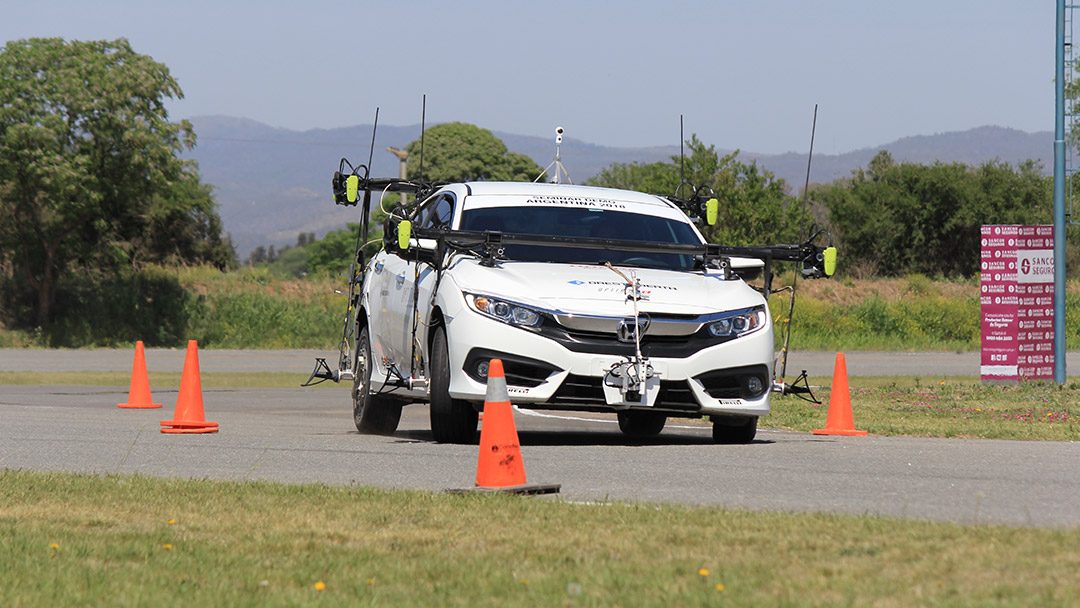
In February 2010 OptimumG in collaboration with Oreste Berta S.A. performed a comprehensive vehicle dynamics test in Argentina. The primary goals of this test were to characterize vehicle performance and demonstrate what is possible with advanced data acquisition.
Vehicle data acquisition using CAN
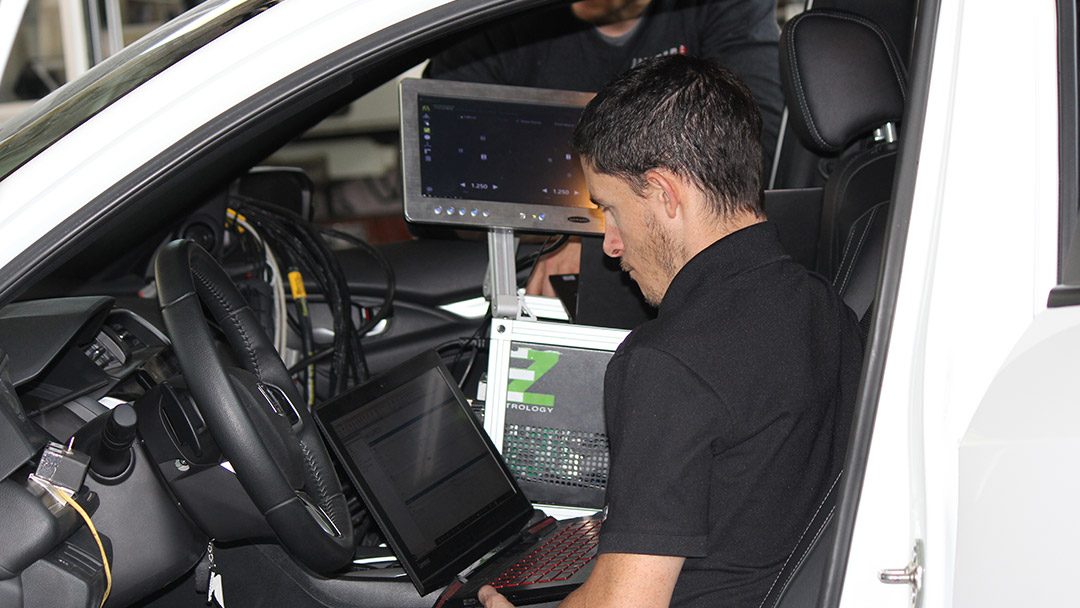
Data acquisition is one of the best tools to increase the understanding of vehicle behavior. One can get tons of information just from a couple of potentiometers and accelerometers connected to a simple data logger. However as one adds more and more sensors a number of problems arise. First, the number of cables and connectors increase to where it becomes both a logistical and economical issue.